Centenary Festival · Phase One · Sunday 24 May
Holism & Christian Mysticism
Embodying Faith: A Path Toward Human Wholeness
Dr Rhett Gayle · Holism, Faith & Ethics
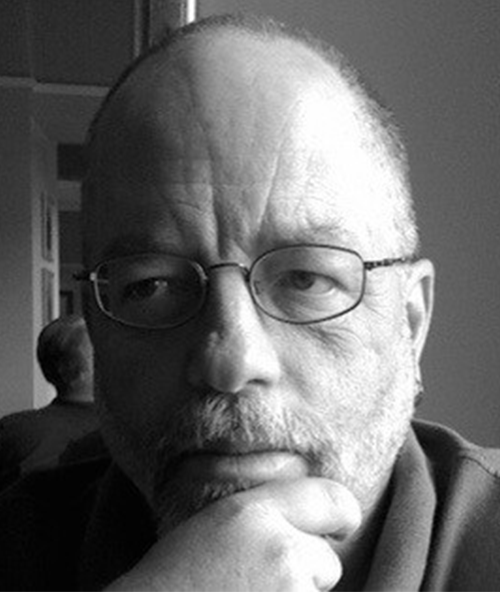
Dr Rhett Gayle is a researcher, educator and philosopher who has taught at the University of Colorado and is author of several academic papers on topics ranging from Befriending Wisdom to Self-transformation.
Watch the recording
Recorded Sunday 24 May, 10h30 CEST. The full transcript is available below and as a downloadable PDF.
The full session
Read the transcript
Abstract
On Pentecost Sunday — also Jan Smuts' birthday — philosopher Dr Rhett Gayle gives the first of the two Sunday talks. In a witty and entertaining style, framed as a sermon with a wink, he sets aside the question of whether Christian doctrine is true and asks the more useful one: Christianity, whether or not it is still the most active religious or philosophical thing going on, is the birthplace and mother of the culture we live in. Taking a holistic view of where we now are therefore means taking honest stock of where we came from — of the gifts the story contains, of the distortions and misreadings layered into it over two millennia, and of what is worth keeping versus what is worth discarding.
Speaking in three roles — storyteller (after Marcus Link), alchemist in the synthesising phase, and fool with beginner's mind — Rhett moves through a compressed retelling. The Eden story is the beginning of the great fragmentation: the knowledge of good and evil as the original split, the loss of naive wholeness, the rise of self-consciousness, and (drawing on his current re-reading of Augustine's Confessions) the framing of sin as self-separation. The Tower of Babel adds a second axis of separation: the splitting of humanity into linguistic and political groupings, each under a different appointed god — a tribal-relationship structure he observes is still visible in the present geopolitics.
The Incarnation is then read as a Jungian conjunction of opposites — and as a corrective to Christianity's reputation as anti-nature, via Maximus the Confessor's the Word of God wills that the mystery of his incarnation be actualised always in all things. What stands out is the recovery of what Jesus as a man might mean: Smuts' reading of him as the exemplar of the free person — not bound by the derision of the mob, not bound by the elders of the community, not afraid of death. Three forms of enslavement most of us never escape. L.A. Paul's Transformative Experience explains why exemplars matter at all: you cannot reason yourself into a new paradigm using the old one, but you can see another person living it.
It is here that the audit gets sharpest. The exoteric Christianity that hardened into 1,500 years of legalistic guilt culture, Rhett argues, is built on a Latin mistranslation of a Greek text Augustine had been beaten out of learning to read by a violent Greek teacher: we inherited death from Adam became we inherited sin, and from that single bent transmission, the next 1,500 years of Christianity in the West goes down the toilet, right there. The doctrine of original sin is, on this reading, a translation accident reinforced by a lawyer's temperament. The esoteric tradition — Maximus, the Eastern Orthodox God became man so that man could become God, the Trinitarian doctrine of perichoresis (three persons, one God, parts remain themselves within the whole) — is offered as the line worth recovering.
The Crucifixion is read as the free facing of all our fears; the Resurrection and Pentecost together as the removal of the curse of Babel, with the multi-thousand-year project of returning humanity to wholeness with itself, with nature, and with the divine still ongoing — whether you call it Christianity or not. He closes with the famous love passage from 1 Corinthians 13, and a corrective the festival had been overlooking: hope and love had been discussed but faith had been left out, possibly because we have been tricked into thinking faith means believing something. It doesn't. Faith is trusting. If you trust the whole, you have faith. Hope is then the outer alignment that follows. And agape — distinct from eros and philia — is the love a coach has for the team, a gardener for the plants, a good parent for the child: love for the full fruition of the beloved.
In response, Jeff Blumberg confirms with some astonishment that almost everything Rhett has said maps onto the unpublished interpretation of Smuts's reinterpretation of Christian doctrine that he has been writing for twelve years — including the exact phrase "faith is trusting in the whole", which appears in several of Smuts's letters. Mark van Wyk then asks the question that gives the session its philosophical centre of gravity: how should we hold the tension between actionable doing, holding space, and just studying metaphysics? Rhett's answer, after a careful re-explanation of agape, lands on the image the session is remembered for: we are not the flour; we are the yeast.
Transcript
Welcome — Michael Stock
Michael Stock: Good morning, and welcome to Day 5 of our Centenary Festival of Holism and Evolution. Many of you will know that today is Pentecost Sunday and Jan Smuts' birthday. My name is Michael Stock, and Claudius asked me to say a few words at the beginning and end of each day. I've known Claudius and his work since 2014. It was so helpful yesterday when people were able to put their names in the chat box, where they are from, and anything else you would like to bring in.
This morning we have two presentations. The first from Dr Rhett Gayle, who we briefly met yesterday. Rhett will be presenting on Christian mysticism and holism. And then Claudius will be introducing some parts of his forthcoming book on Smuts as part of his talk — as well as, and here's a trailer, taking us for a little walk outside later.
So let me now introduce one of the founding and most important members of this long Holos project — Joshua Malkin, who will introduce Dr Rhett Gayle. Joshua began working on something called Reimagine Britain in 2012, which is a wonderful example of the power of imagination not as escape, but as inquiry. And then, ten years ago, working with Claudius and others around the table. Joshua.
Introduction — Joshua Malkin
JP Malkin: Thank you very much. As someone who personally sees great value in the esoteric Western tradition, and because it was this very topic that brought Claudius and me together and started this twelve-year journey which has resulted in this festival, it's my great pleasure to introduce Dr Rhett Gayle.
Rhett is a researcher, educator, and philosopher whose most recent publication, I believe, grew out of his research into the connections between Taoism and complexity science. He's particularly interested in the transformation of suffering into wisdom — something I'm particularly interested in as well. I'm going to be fascinated by his presentation today on pre-imperial Christianity and its potential as a resource for creating a new world. So, without further ado, over to you, Rhett.
The talk — Dr Rhett Gayle
Framing
Rhett Gayle: Thanks. Wow, that was a great introduction. Greetings from China — I didn't put where I was from in the chat box, but I'm living in Macau. I've lived here for about ten years. Although, as you might have guessed, I'm not Chinese. I'm from America, although I lived in the UK, where I met Claudius and Joshua many years ago.
I'll preface all of this with: I spent most of yesterday trying to integrate the talks I connected to, and so I have some suspicion that I have not achieved full wholeness in my presentation. But I will assume — since you are all good whole-makers — that you'll help me in that area.
I'm especially interested in synthesis, cognitive frameworks, Taoism and complexity. I've written on Tiantai Buddhism and post-postmodernism. I'm interested in Hegel, Spinoza, philosophy of maths and physics, cognitive science — blah, blah. That's so you can ask me interesting questions afterwards. And while it's not my most recent publication, I'd like to mention that I published an article that I think is relevant to this festival, with my much smarter and much-better-writer wife, Victoria Harrison, called Spiritual Exemplars and Self-Transformation.
So — some framework, and then we'll get to the beginning. Just to be clear: I am not providing any arguments for or against the truth of the doctrines of Christianity. That is not my job. My talk is fine whichever way you happen to go on that.
Why would we spend any time at all talking about Christian mysticism? After all, many of us have been taught that Christianity is a contributor to any number of terrible things in the world — and surely, as a Manichaean dualism, etcetera, it's not the sort of thing people interested in holism should be that excited about. I think that's probably a mistake, for a couple of reasons. One: paying attention to Christianity is useful, because it's the birthplace and mother of the culture we live in, regardless of whether or not it is still the most active religious or philosophical thing happening. It is, in fact, a great source of our culture. Not necessarily the culture I'm living right next to — that's more Confucian — but our culture.
Two: holism, as Smuts conceived it — as was pointed out very ably by the first presentation I saw — was an attempt to appeal to the scientific culture of the day, while going beyond the crude atomistic materialism. It was nonetheless an attempt to find some sort of religion that would provide meaningfulness to a culture which had accepted the premises of science such as they were. I think that's an admirable and useful goal, but I think it's also unbalanced in a certain way. One of the ways I think about what I'm going to talk about is as a balancing structure for the initial thrust of holism. Smuts himself must have thought something like that, and didn't manage to pull off his second book — possibly because he was concerned about scientists. Hopefully, this will be a mild contribution to the rebalancing of the books.
I am here today in a few roles. One — hat tip to Marcus Link — I'm here as a storyteller. I'm not trying to tell the truth; I'm trying to tell a useful story. I'm also here as an alchemist. That came up a few times yesterday — I'm at the synthetic phase of alchemy, trying to put things together. And last of all, reference to Marcus again — I'm here as a fool. I'm trying to bring some beginner's mind, as the Zen people would say, to what we're talking about. Not to try to have too much of a preconceived idea about what I'm doing.
It is Pentecost. When I was a young man, my family thought I was going to grow up to be a preacher. That didn't work out. I became a philosopher instead — which is sort of like being a preacher with better money and less doctrinal obligations. But, nonetheless, I'm going to think about what I'm doing as a kind of sermon. In a sermon, you try to point out what the congregation is not paying attention to. Some people might call that the shadow, maybe not. You remind them of the tradition, and then you cheerlead them on: hey, go out and do some good. I'll try to do those three things. And in that it is a sermon, I'd like to start with a very brief prayer, because that would be traditional.
Oh, great divine Sophia: grant us the wisdom that our words and thoughts will serve the evolution of the divine in the world. Amen.
The Eden story — the original split
I thought I'd start with a very compressed story of Christianity, told from a holistic perspective. Not the perspective of the book called Holistic Christianity, which was just too complicated, but this.
Once upon a time — as all good stories start — there were two humans. Adam and Eve, as we call them. They lived a pretty idyllic life, if you happen to like hanging out in gardens while the weather is sufficient that you don't have to wear clothes, and they just picked food off the ground or off the trees, and everything was good. And then one day, one of them — traditionally, the patriarchs claim it was Eve, but I'm not convinced that was true; I think Adam just blamed Eve — did something. And as a result, they came to possess the knowledge of good and evil.
That is the beginning of the end of the whole. We have now divided the world into this is the stuff I like and this is the stuff I don't like. We've seen that thread weaving through the presentations, and certainly even more through lots and lots of the noise being generated by the world around us. These are the good things and the good people; these are the evil things and the evil people. We can't unite with those people, or those processes, because those guys are evil. And we're not.
This is the beginning of humanity's descent — from wholeness, from companionship with nature (as was brought up), from companionship with God, from a lack of self-consciousness. Because one of the things that happens when we become self-conscious is we lose our naive wholeness. We start thinking about ourselves as if we are both subject — the one thinking — and object, the one being thought about. I'm not being as productive as I should be — to have that thought requires that I'm thinking about myself as separate from me. And that might even be how we start thinking about things like sin as a self-separation. I'm currently listening to Augustine's Confessions. Boy, there is a guy who is really not at peace with himself, because this is a sin, and that is a sin, and I actually enjoyed a piece of music that wasn't about God — oh, bad on you, Augustine. So this is the beginning of all the separation.
Babel — the second split
I think the Eden story is not that unexpected. But as I was preparing for this a few weeks ago, I ran across another story of separation which I hadn't considered. The story of the Tower of Babel.
Something I hadn't known — maybe you do, maybe you don't. At the time that story was written down, the gods — not God, but the gods — were thought to live on the tops of mountains. Baal, Mohawk, and all those guys. So when it says they're going to build a tower to the heavens — all this time, being a great sci-fi reader, I thought they were trying to get to the edge of the atmosphere, which seemed hard with a tower. But what they were actually doing was building an artificial mountain — high enough that the gods would want to live on it, so that humans could go up it and meet the gods.
This turned out to be a terrible idea, and Yahweh, the real God, cursed humanity. How are they cursed? They broke up into a bunch of different linguistic groups, so that when I go to buy groceries, the people I go to buy them from don't understand what I'm saying, because they all speak Chinese and I don't. This is another way separation has happened — not separation from nature or God; those happened in Eden. But separation from each other. Into tribal groups, into nations, whatever.
And the person who was explaining this in the book I was reading pointed out something I had just never noticed, even though I've read this story: the real God, Yahweh, appointed gods to be gods over all the other nations. Because those gods were real — they just weren't the creator, the ruler, whatever. So not only did the nations have different languages, but they also had a different centre of organisation. We see the results of that even today. Donald Trump hates Iran, Iran hates Donald Trump. The Israelis are after Iran, Iran is after the Israelis, the Chinese are doing whatever they're doing. This is all a continuation of this problem, where we decided to try to control the gods.
This fragmentation in our system of order is in governance, as in nature, and is also internal to ourselves. There's a whole lot more of the pre-Christian story — but you could think of it this way for the sake of this talk. It's a bunch of people organised around their own gods. One group seems to be organised around the real God, but it's all tribal. All the relationships with the divine are groups, in distinction with other groups, relating by covenant if you happen to be Hebrew. There's no concept here of an individual relationship to the divine. It's a tribal relationship. That individual relationship, as Smuts points out, comes about with the advent of Christianity.
The Incarnation as a Jungian conjunction of opposites
Christianity — I don't really like that word all the time; I'm not really sure what to replace it with — is a break with the way things are at that time. One way this break happens is that it offers the possibility of individuals being whole in their relationship with God, in their relationship with themselves, and in their relationship with the world. We could call it nature, whatever you want. This is the first budding of a kind of recovery from Eden.
Again, I am not saying this is true; I'm saying it's a useful story, and we can see something important by looking at it. So just to be clear, I'm not going to get out the baptismal font at the end and stick your heads in it.
The first element of the story, if you're a mainstream Christian, is: God becomes man. In a pretty embarrassing way. He's born in a manger — or probably not in the manger, just put there afterwards. Some people think it was a cave, which would make sense. There he is. And then he and his mum and dad have to flee to Egypt, etcetera. But the important thing is that God, who has been separate from us — in the Hebrew tradition, the best you could do was God being in the covenant, inside the Ark of the Covenant, inside a room inside a room inside a room, that only the high priest could go to once a year. And then the Ark was stolen by the Ethiopians, so even that was gone. God was not really available. God was like: here are a bunch of rules; follow the rules, life will go well for you; otherwise you're out. But now, God is choosing to come to Earth.
A couple of things about this are important. Harking back to a couple of the presentations: this is a Jungian conjunction of opposites — the divine and the human, which have been in opposition up until this point. Now there's this person who embodies the bringing together of those things. Regardless of whether you think this is a real person, or this is a ridiculous story, that's the story.
Maximus the Confessor — God joined with all of nature
There is a reputation Christianity has, that it is against nature. I think there are reasons it has that reputation, but I don't think it's right. I myself — I'm not advocating this for everyone, but I myself — have been a great fan of Maximus the Confessor. I have a quote from Maximus that I think is relevant:
The Word of God, very God, wills that the mystery of His incarnation be actualised always in all things.
So not just in the person or body of that guy. The incarnation is actually, like, the spear-tip — or the concentrated coffee espresso version — of God coming into everything. Maximus, being a good Greek, would also note that humans contain in their nature all of nature. We have the material stuff, we've got the biological stuff, we've got the animal consciousness, and we also have our human consciousness. So by becoming human, God is joining with nature — and further, is trying to extend that joining with nature. So this fits exactly with the kinds of things talked about in other presentations, where God is deeply connected with evolution. Maximus, of course, being a long-dead Greek guy, didn't know about evolution — but nonetheless, we could see what he's saying as: this is evolution as God's expression. This is the consequent nature, to use the Whitehead language that came up yesterday. So we can stop thinking of Christianity, or at least some aspect of Christianity, as being opposed to nature.
Jesus as the exemplar of the free person
Smuts describes Jesus as the exemplar of the free person. He is not bound by the rules of his society; he is not bound by the rules of his tradition; and he is not bound by the things that most of us are afraid of. He's not afraid of the derision of the mob, he's not afraid of the elders of the community, and he is not afraid of death. Those three things, right there, are often how we remain enslaved. We don't do things that we know to be good to do, or would desire to do, because — well, somebody might not like it. And if somebody doesn't like it sufficiently, there's always that cup of hemlock, or the crucifixion, or the poisoned pork — or whatever happens to people who decide to be a little too outside the herd.
This is an important aspect of the Incarnation: he is exemplifying what it would be for us to be free.
Exoteric and esoteric Christianity
Joshua brought this up already. We could say there's a kind of exoteric version of Christianity and an esoteric version. The exoteric version is that you believe something, however ridiculous it might be, and that grants you salvation from God's judgement, which arises from you violating the law. Somehow Jesus is supposed to make this all better. I think Jim Jefferies once said: so God was mad at us, so he killed his son, and now everything's fine. That seems odd.
A little about how some of that idea came to be. It's in Augustine, who was hugely influential. Three things I learned. One: Augustine spent a lot of time feeling guilty. Two: Augustine was a lawyer. I did not know that. Now I understand how he's thinking — it's all about law, and violating the law, and punishment, and God as a judge.
But there's another thing which is deeply rooted, at least in my experience of growing up Christian: the idea that we are naturally sinful. Because Adam sinned and we inherited that from Adam. The doctrine of original sin. It turns out we can thank Augustine's Greek teacher for this. Why his Greek teacher? It turns out Augustine only read the New Testament in Latin. But the passage about sin and death in Romans is actually written in Greek, and he didn't read it in Greek. And I wondered why he couldn't read it in Greek — he was an educated guy in the right time period. It was because his Greek teacher would beat him when he didn't understand. So he never learned to read Greek, because he hated it.
The problem is, in the Greek, what it says is: we have inherited death from Adam — not sin. And that's true. We are all mortal, and that's what we inherited from Adam, because he wasn't mortal until the Fall, and so now we're mortal because Adam was mortal. But in the Latin, it looks like what's being said is we inherited sin from Adam. And thinking of sin in a legalist way — now here we go. In the next 1,500 years of Christianity in the West, down the toilet, right there.
So — if you are a teacher, don't beat your students. That's a joke, but nonetheless, it is what happened.
On the other hand is the mysticism part — the esoteric Christianity — which aims at union with the divine. To the extent there's something wrong with us, it's not that we're inclined to be evil; it's that we're separated from the divine, which is unnatural for us. We are actually intended to be with the divine. Somebody like Maximus would say — and this is still true in the Eastern Orthodox tradition: God became man so that man could become God. That's a very different idea than the other sorts of ways of thinking about it.
One thing that goes along with that is the notion that what we're after is direct experience. If I'm going to be united with the divine, that's going to have some effect on how I experience the world. It will also probably have some effect on who I am in the world.
Perichoresis — three persons, one God
This is strangely a side note, but not. One of the big problems in early Christianity — pre-imperial Christianity — was how do we think about Jesus as God? A lot of people, and maybe this was even the standard view, thought of Jesus as a kind of secondary God. There's God the Father, and then there's this other divine being, Jesus, who's the secondary God. Just as divine as the Father, but somehow not right at the top of the pyramid. We nowadays call that the Arian heresy, but it was probably actually orthodoxy up until the Council of Nicaea.
Eventually we get a Trinitarian notion. And here's the question, which I think is relevant to people thinking about holism: how can a God that has three persons still be only one God? Seems hard.
There is a word for this — perichoresis. So you both get the persons being separate, and there still being one God. And it seemed to me this was a good description of exactly the kinds of things Smuts was talking about, and other people were talking about yesterday — where you are one with everything, but still yourself. This is, in a sense, right at the core of Christian mysticism: how things can be unified, and still retain their separate identity. Sometimes when I hear people say it's all one, as the hippies in my Boulder youth would say — are you saying I'm just going to cease to exist? Because I'm just one with everything? It doesn't seem as appealing as it could be — although being separate from everything else also seems somewhat unappealing.
The Kingdom of Heaven and metanoia
So, after some indefinite period where he visits the Essenes in India, or works as a carpenter, or whatever happened between the early days and the beginning of Jesus' ministry — Jesus starts walking around and talking to people. He mostly gets one of two reactions: wow, you must be the Messiah, let's walk around with you, or what the hell are you talking about, please get out of our town. There was a third — you cast out the demons and all our pigs ran into the lake, you should leave. That's a sort of side thing.
What was he doing while he was walking around? My claim is that he was exemplifying something. Making something visible, in his person, as an exemplar. What would he say he was exemplifying? The Kingdom of Heaven.
The Jews of his time were looking for a king — but they thought the king was going to be the guy who would come and wipe out the Romans and make Judea great again. They all had the red hats and were marching forward. But Jesus was like — nope. I'm not here to do that. And this Kingdom of Heaven you're looking for? It's already in you. Which connects very directly to all the stuff about inwardness that came up in earlier talks. The Kingdom of Heaven is within you.
I started wondering, as I was getting ready for this, what the Kingdom of Heaven was really like. The Kingdom of Heaven is where we're free, and are acting on our image of God — which is, we are creators. And that's exactly what you all have been talking about this whole time. Being free to create a world we would like to live in. It seemed Jesus was saying: look, you guys think what you're waiting for is some — the world being better out there. The Jews have been conquered by the Romans, and the Romans are kind of not very nice people. You piss them off, they nail you to a couple of boards and stick you up in the sky until you die. They get people to fight each other with sharp swords for entertainment. They're not nice.
In a certain sense, they are exactly the exemplification of the thing David Lorimer talked about with McGilchrist: the absolute triumph of left-brain bureaucracy backed by force. While things suck in our current world, and we could wipe the whole species out or whatever, it's not like the people living in Israel at that time were having a great day. And Jesus' message was: look — winning externally is not going to happen unless you recognise that you are already living in the Kingdom of Heaven. You have a choice. You can become reborn — metanoia, mind change, transformation — and then you'll see that you're in the Kingdom of Heaven.
A couple of things relevant to us today. One: focusing on what's wrong with the things around us makes it harder to see the Kingdom of Heaven. Every minute I spend complaining about Chinese bureaucracy, or how they're reconstructing the apartment below me with jackhammers, or how the politics in my home country are insane — all my focus on that is exactly not focusing on perceiving the Kingdom of Heaven. I'm not saying close your eyes. I'm just saying — if what we're after is the whole, what Jesus might say to us is: focus on that. Don't blind yourself to what's going on, but don't believe that it's the most important thing happening. The Kingdom of Heaven is within you; look within. Let's all read the Gospel of Thomas and get some good techniques.
Transformative experience — why exemplars matter
When he talks about metanoia, mind change, he's also making a point. For a long time, early in my life as a person interested in complexity, people talked about the need for a new paradigm. You've probably heard that. We need a new paradigm. Things are going to hell in a handbasket; new paradigm; new way of thinking. And I started having this problem: every time I tried to think about what a new paradigm would be, I was using the way of thinking that I already had — which was the old paradigm. Furthermore, it didn't really seem to me that I could just will myself to a new paradigm. Oh, I need a new paradigm. Now what?
A very clever philosopher, L.A. Paul, wrote a book called Transformative Experience. She pointed out that we have this problem in a lot of ways. If you were in the relevant age group, trying to decide whether or not you wanted to have children — here's the important piece of information you don't have: what it would be like for you to have children. You might see other people having children, but what you don't know is what it would be like for you. So you have to make the decision not knowing. (Hey, I'm not talking about you, Mark.)
She has a bunch of examples like this. Let's say you wanted to learn to appreciate music, but you didn't. How would you do that? Because you don't appreciate it. How would you come to appreciate it? How would you even be motivated to appreciate it?
Here was her solution, and I think it plays exactly into how Jesus as an exemplar is helpful. There is someone who is exemplifying that new paradigm, and you see them. Even though you don't know what it would be like to have children, you can see those people having children.
This connects to a couple of points I wanted to make. A lot of the contemporary discussion of holism and spirituality — and I haven't heard this in this group — is dominated by the notion of emergence. God is going to emerge. This is going to emerge. Okay. As far as I can tell, that's the same as saying a miracle will happen, and then we'll move on. But we might note that the old-school thinkers pointed out: in addition to emergence, there was emanation — information, energy, spirit from elsewhere.
The claim is Jesus is an exemplar of a free person — and that freedom comes from somewhere else. Even though he's fully human, just like us, his freedom comes from outside the system of order we are trapped in.
In the world, not of the world
Here's one of those great sayings I've loved my whole life and misunderstood pretty much my whole life: you should be in the world, but not of the world. That led me to spend a lot of time thinking it was good to live on the planet but not really care about what's going on here. Thanks to the great David Bentley Hart, I realised that the word being used, translated as world — there it is actually cosmos. But cosmos doesn't just mean life-the-universe-and-everything; it actually means a system of order.
So we have to live in the system of order given to us — because there it is. But we shouldn't be citizens of it. We shouldn't take the values it's promoting, and the choices it's promoting, and the authority it's promoting, as being real. That's the message Jesus is giving when he says, be in the world but not of the world.
If you are a citizen of the Kingdom of Heaven, then you are not obligated to the system of governance you are currently living in. Which is exactly the insight that moved Gandhi, that moved Thoreau, that moved Tolstoy, that moved Martin Luther King. I don't have to accept the authority of the world if the authority of the world is not lined up with the Kingdom of Heaven. This seems important for people like us, who are trying to bring a new world into being. The project of bringing a new world into being was actually started back in the time I'm talking about — the Kingdom of Heaven, where everybody treats everybody as equal, where everybody treats each other well. That's the project we're still on. I'm not saying we have to think of it as Christianity — but it is a continuation of this project. It's important, I think, for us to recognise that we're not in this only from our end.
I used to put it this way: the world is not an oyster. That seems like an odd thing to say, since it's really obvious — but it was a response to a lot of my friends in the environmentalist movement who seemed to think the world needed us to save it. Oh, there's an oyster, it's somehow not in the water, we'll pick it up and throw it in, we've saved it. But the world, nature, God — all those things are way bigger and more intelligent than us. We should think about cooperating with it, not saving it. I feel like I've had the you've got to change the world drilled into me for zillions of years, and in the end it just leads to a feeling that I can't do it because it's too big and I'm too small. Back to emanation — I'm just offering: let's remember, we don't have to do it all ourselves. The intelligence of the universe was there before us; it'll be there after us. If we think it's going in a good direction, we should just get with the programme.
Crucifixion and resurrection
After a while of walking around and talking, Jesus finally succeeds in pissing off the relevant people, and they decide to kill him. This is a wave of having the most terrible experience: he's betrayed by his friends, he's tortured, he's betrayed by his own religious community, and then he's tortured to death. For those of you who haven't really grokked this, crucifixion is a really terrible way to die, and it's also the death reserved for the very lowest of the low in Roman society. It's the most humiliating possible way to be executed. Bad deal all the way around.
Two things in this part of the story are worth thinking about, relative to what we're trying to do. The first: Jesus said, you think you have power over me, but you don't. God is allowing this to happen. So it's not really on you at all. He knew it was going to happen — he could have left. Right? Oh, okay, I'm not going to be here. So he chose all of that terribleness, with forethought.
There's this great scene, which I was reminded of when we were talking about left and right yesterday. He's talking to Pilate, the representative of the Roman bureaucracy. Pilate says to him: what is truth? And he just stands there. That's because Pilate wanted truth to be some left-brain — here's the truth, da-da-da-da. And Jesus was just standing there exemplifying the truth. Pilate went along with his death — in spite of the fact that his wife, the feminine wisdom, said: I had this dream about the man that's coming before you, and you really shouldn't kill him. Nonetheless. So he dies.
This has some relevance to the question of freedom: he is facing all of our fears, freely.
But then, somewhat unexpectedly. Imagine what it was like for his disciples. Yeah, the guy we thought was all that — the Romans just wiped him out. Sure, he said something about coming back, but I don't see him anywhere. We stuck him in a tomb and rolled a big rock in front of him. I think he's dead. Now what? He shows back up, so the story goes — although not in the Gospel of Mark, where there is no resurrection.
How is this relevant to us? Well, as a story, this is how it's relevant. We are in a culture, as you all have said several times, that seems to be dying. But, like the phoenix, or Jesus, we could imagine that that death is the precursor to rebirth. To something better. Surely we think the way it is now — even if it was possible — shouldn't go on forever, even if it wasn't destroying the basis for its own existence. All these people being tortured, all these wars — we don't really want this forever. This seems kind of crazy. So maybe we could take the death as a stage, leading toward resurrection.
Jesus comes back. He talks to them, does a bunch of stuff. Note — he's coming back as a body. This idea that Christians are all about the ethereal, pie-in-the-sky, by-and-by — that's true later, but it's not true in early Christianity. They thought resurrection was: you're going to get up and walk around and eat a fish. There's a better body than you had before, but you're not this ethereal ghost. And heaven isn't that either.
Pentecost — the removal of the curse of Babel
So — resurrection. He ascends into heaven. He says when he leaves: I've got to go so that the Holy Spirit can come. Now we're almost to the part where it's Pentecost.
He leaves. Sometime after that, the disciples are all hanging out in a room. Suddenly fire comes pouring down from above. It doesn't set anyone's hair on fire — and not just because they don't have any hair, like me. They are filled with the spirit of wholeness. Just like Jesus. He has gone from being the unique exemplar to being the precursor of a more general embodiment of wholeness.
Here's the evidence. They go out onto the balcony and start preaching. Hey, here's the good news! God's not a million miles away after all. He was here, like, 15 minutes ago. They killed him, but it didn't matter. He's back. And we can all participate in that wholeness. This is a good message — hence the gospel. Not the and if you don't believe us, you're all going to hell — that doesn't seem like good news. So maybe that's not what they were saying.
But here's the thing — this is the removal of the curse of Babel. Because everyone understood them, no matter what language they spoke. The meaning was transmitted to people who spoke Latin, Greek, Ethiopian, Persian, whatever — even though the disciples, who were not very educated people, were undoubtedly speaking Aramaic. Everybody understood them. So the return of the divine not only fixed the vertical split, but also started fixing the horizontal split.
Then we have the whole body of Christ, and the idea — to bring in Teilhard de Chardin — that down the road, there's going to be a united humanity, and that the Christ event is the kickoff. The opening horn for this multi-thousand-year event where we all return to being together with each other, and together with the universe, and together with God.
Hence why we might think Christian mysticism is useful: it provides us with all of the images, metaphors, tools, ways of thinking about this — so that we, in our contemporary life, can pursue this without thinking that it's just on us.
A personal story
I'll tell a brief story on myself. Many years ago, I was getting ready to go to graduate school in philosophy. It was summer time, and I took an environmental philosophy class — I lived in Boulder, I cared about the environment, this was a good class to take. By the end of the class, I was convinced we were doomed. There was absolutely nothing to be done about it. One of the books was called Environmental Economics, and I was like, okay. We're in what I now call — taken from somebody else — a Moloch trap. Nobody wants this outcome, but nobody can choose otherwise, because unless none of us defects, we can't make the new choice. That was the claim. So I thought: we're doomed. What I should do is find a comfy spot and find something entertaining to do until the oxygen runs out. I didn't know how long that was going to be, but it didn't seem worth, you know, throwing myself against the ramparts, knowing it was pointless.
So I thought — well, okay. I live in Boulder. There's a lot of things to do that are fun. I'll go to graduate school in philosophy, but I'm not going to study environmental philosophy. I'm going to study metaphysics, because metaphysics is entertaining. Someone once asked me about that, and I said, well, I believe in the principle of doing no harm. And since metaphysics does nothing, I can't possibly do any harm.
Faith, hope and love — and a Bible verse
So — how am I doing on time, Claudius?
Claudius van Wyk: If you can wrap up in the next couple of minutes.
Rhett Gayle: Oh, I can do that, no problem.
No sermon is complete without a Bible verse. So I'll give you one. Yesterday we talked a lot about love and hope. This is the famous love chapter from Paul:
Love never fails. But where there are prophecies, they will cease; where there are tongues, they will be stilled; where there is knowledge, it will pass away. For we know in part and we prophesy in part. But when completeness comes —
There's the holism.
— what is in part disappears. When I was a child, I talked like a child, I thought like a child, I reasoned like a child. When I became a man, I put the ways of childhood behind me. For now we see only as a reflection in a mirror; but we shall see face to face. Now I know in part, then I shall know fully — as even I am fully known.
And now these three remain: faith, hope, and love. But the greatest of these is love.
If I had another half an hour, I could talk about love a lot. But I will point something out. We talked about hope and love yesterday, but we did not talk about faith. And I think that's because we've been tricked. Faith is not believing something. Faith is trusting something. If you trust the whole, you have faith. If you believe that something, something, something — that's not really what Paul is talking about.
So, if you have faith, the promise of the One acting invisibly behind the many is behind you. Hope is then the outer — knowing, trusting that the outer will align with the inner, because faith is what aligns the inner. And love — keep in mind, that's agape. Agape is the kind of love that parents have for children, or gardeners have for plants, or God has for you — and that is for full fruition. That's what we're working for: the full fruition of the divine in humanity and the world.
Thank you for your time and attention.
Response — Jeff Blumberg
Michael Stock: Claudius, I think I'd like your guidance here, because we've heard such an extraordinary message. We could move on to your next session at about this time, or we could take a break, or we could extend it. What would you wish?
Claudius van Wyk: My sense is that Rhett's presentation has been so challengingly provocative and creative, we might just want to create some space for folks who want to engage with it. Mark.
Jeff Blumberg: Could I just comment before we break?
Claudius van Wyk: No, no — we want to hear what you have to say.
Jeff Blumberg: I don't have questions, just congratulations. Rhett, fantastic. I don't know whether you sat in on my talk on Thursday — but if you had, you would know that the book I'm writing is the book about Smuts' interpretation of Christian doctrine, in terms of holism. So you'll be glad to know that everything you have said today has been attempted by Smuts himself. The resonance between what you've said and the insight you've managed to grasp — with your understanding of holism — he's so close to what Smuts did. I suspect you might even have caught sight of my unpublished book, because it's so close.
When you ended off, when you said faith is trusting in the whole — those are Smuts' exact words. That's his definition. Wow. I can show you letters where he repeats that phrase, faith is trusting in the whole, several times. It's incredible what you've come up with. And your faith-hope-and-love was a theme; he used to mix it up with faith-hope-and-charity sometimes. And then, of course, all the concepts — incarnation, resurrection, all being reinterpreted in terms of holism — which you have articulated so well today. I don't know whether you had time to bring it together with the Babel curse and today's Pentecost Sunday — the Babel is where we're dividing humanity, and I think today is where we attempt to reunite by the spirit. So, your talk was excellent. I understood it. Thank you very much. I've got much more to say, but I won't bog it down.
Rhett Gayle: We can talk another day.
Mark's question
Michael Stock: Thank you very much, Jeff. Claudius, would you like us to take a short break now, although I see Mark has his hand up.
Claudius van Wyk: Let's let Mark in.
Mark van Wyk: Thanks very much, Rhett, for that fantastic presentation. I found it very thought-provoking, and I really love your — how should I say — playful way of presenting some very serious concepts. One thing that really resonated with me, that I've been sitting with for such a long time, is this wanting to save the world concept. Shreyas, preyas — there must be something I can do to fix it. And then I think someone called it once the perfect-world hypothesis: that everything is the way it needs to be, and everything is in process, and you can just allow it.
And then, sort of crossing that, is this idea that nobody wants this outcome, but we can't collectively do anything about it — which is just such a ridiculous concept for me, which then goes against that and makes me think: well, then let's go do something about it. Which then goes against the everything is happening the way it needs to happen.
And then, to confuse things further, there's this idea I absolutely love — the way I understood what you're saying is that faith is holding the energy, the space behind it. The hope I love, that is the alignment with the universe, allowing synchronous events to take place to feed that. And then I didn't quite get what you said about love, and how that fits in underneath that — so I'd love to hear what you have to say about that.
And I'd also love to hear your thoughts about — for you, where did you end up placing yourself in this kind of dichotomy: doing actionable things to try and make the world a better place, versus holding space for it, versus actually just sitting back and studying metaphysics. Thank you.
Rhett's answer — agape and the yeast
Rhett Gayle: Well — okay. I'll respond to that.
Mark had two things. He said he wasn't quite sure what I was saying about love, so I'll say something about that.
The word used for love in the passage God is love is the Greek word agape. There are different words for love in Greek. Eros, agape, philia, a few others. Agape is the love that wants the best for the being that's being loved. I sometimes think of it as the love a coach has for his team — he wants the team to do well, he wants all of the players to be as good as they possibly can be. My friend Aaron would say it's the love a good parent has for their child. They want the child to be as much as possible — to fulfil their gifts, to be happy, not just to be happy, but to flourish maximally. And that isn't so that I'll feel good. It's not I'm trying to possess the person I love so I'll be happier, or I'm trying to be friends with them so we can have a good friendship. It's really a kind of — I want to give to that being so that they can be as much as possible. That's the kind of love that's being talked about when it says God is love. It's not God really likes us, or God wants to date us, or God thinks the universe is something to be friends with. I'm not saying those things aren't true — I'm just saying that's not what's being asserted there. We have a very impoverished language in English, where we only have this one word, love. Whereas Greek's got six different words. Was that helpful, Mark?
Mark van Wyk: I think so. I was looking at it from the perspective of this kind of driving force — that can, between faith, hope and love, you know.
Rhett Gayle: Right, right. Look — that is a driving force. In the Mahayana Buddhist tradition, the bodhisattva is motivated by the desire to liberate all sentient beings. That's the motivation of a bodhisattva. I'm not claiming that for myself — I'm just saying that would be an example of agape as a motivator. God is love — but if we are exemplifying love, what we want to do is to act in such a way as to maximise the potentials of whatever comes in our scope.
Now I'm going to answer your second question in that context. Here's the problem with changing the world. The world is an abstraction. There are nine billion people in the world. When you're thinking about changing the world, you're not thinking about changing nine billion individual people. You're thinking about some vague system of abstraction. And it's pretty hard to imagine how you might change that. You could think, well, gosh — if the world was changed, then the buses would be on time, and the air would be breathable, and food would be cheap. You could think about the results of it. But you can't really think about the whole thing.
You can think about making the world better, in the sense of what you can get your hands on. That you can make better. So — you asked about where I am on the metaphysics does nothing, study metaphysics, which I still do line. It turns out, I'm not the Messiah, I'm just a naughty boy. So that's not happening either.
In some sense, I could say this: look, I don't need to save the world. Jesus already did that. Done. Let's move on. But, in a certain sense, the world doesn't need saving. All humanity gets wiped out — God's not gone. Whatever project God is on, still is continuing. I'm not saying this is a good outcome. I'm just saying — we're not responsible for it. If you take responsibility for it, you're either going to become a megalomaniac or really depressed. I tried both those things; neither of them were very fun.
The question is: what is given to you to do? You can tell that from what you're good at, what you're attracted to, and what's valuable. For me — part of my agape toward the world is trying to be a good husband to my wife, and a good whatever it is — I don't like the word owner — to my dogs, one of whom is sleeping right now. That isn't all of it. I also want to do whatever I'm doing — this talk, whatever. But I have to recognise that as a finite being, there are things in my wheelhouse and things that aren't.
I have a friend who had this problem, finally got over it. Everyone he met who was not living up to their potential, he wanted to get in their face and get them to see that they needed to do that. And he did. As you might imagine, it was totally ineffective. Most people don't want random strangers telling them how to live. That would be my answer to your question — you have to intuitively find your place. Look at the gifts you've been given, how you can give them on. I was a teacher, that kind of thing. And recognise that the world is composed of lots of people.
One more thing. I had this lined up in my talk, but I didn't get to it. There's a parable Jesus tells, where he compares the body of Christ — the church — to yeast. Yeast is not the whole loaf of bread. You put it in the bread, and it causes the bread to rise. Those of us who want to bring about the Kingdom of Heaven are not like the flour. We're like the yeast. All we have to do is have a small effect — and then the whole loaf will rise.
© 2026 Claudius van Wyk. All rights reserved.