Centenary Festival · Phase Two · Friday 16 October
What Would a Truly Holistic Civilization Look Like?
Envisioning an Ecocivilization for a Regenerated Earth
Jeremy Lent · Ecocivilization
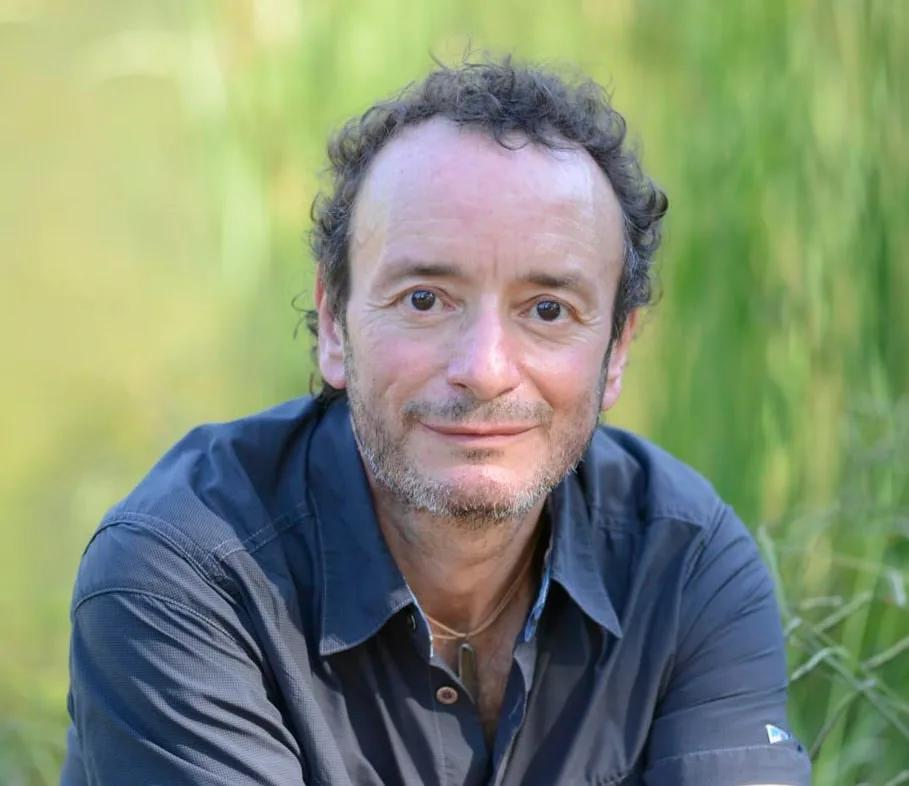
Jeremy Lent is an author and speaker whose work investigates the underlying causes of our civilization's existential crisis, and explores pathways toward a life-affirming future. His new book, Ecocivilization: Making a World that Works for All (May 2026, Melville House), lays out the potential for a fundamentally different world system -- an ecocivilization based on life-affirming principles rather than principles of extraction and exploitation. He is co-founder of the Ecocivilization Coalition and founder of the Deep Transformation Network. His previous two books were The Web of Meaning and The Patterning Instinct.
Watch the recording
Recorded Friday 16 October, 18h00 CEST. The full transcript is available below and as a downloadable PDF.
The full session
Read the transcript
Abstract
Jeremy Lent asks what we are trying to save when we speak of saving civilization. He argues that the present system is not broken. It does what it was built to do: extract wealth from nature and from most people, and pass it to a few. He traces this to a worldview of separation that arose in early modern Europe, and he shows its results in the Great Acceleration and the overshoot of the planetary boundaries.
He offers a different foundation. Drawing on systems science and on traditional wisdom, he says that interconnection and cooperation are our nature. From this he builds the idea of an ecocivilization, a civilization based on life. Its principles include the intrinsic value of all life, human dignity, diversity, subsidiarity, structural equity and design for cooperation. He describes what these could mean for the measure of success, the commons, universal basic income, corporate charters, citizens' assemblies, planetary justice and the rights of nature. He closes with islands of coherence, the three horizons of change and the Symbioscene. He invites everyone to take part, because the unravelling of the old system opens room to reweave society around life.
In the dialogue, Mark van Wyk speaks of despair and an ember of hope. John Varney asks how people change. Nina asks for more urgency and describes agroecology in South Africa. Michael Stock, William Frater and Klaus Mager raise the future, the legal system and a water-short county in Oregon. Glen T. Martin describes the Earth Constitution. Peter Anderson invites a follow-up on operationalizing an ecocivilization. Jeremy answers each with the same thread: people and systems change one another, and the work is to remind people who they are.
Transcript
Welcome and Jeremy's arrival
Claudius van Wyk: Greetings, Jeremy. You're so welcome.
Jeremy Lent: Greetings, and my apologies for being a little bit late. We actually are without power here. I'm calling from Northern California where they've shut the power down to avoid the risk of wildfires. So I've been scrambling a bit to make sure we've got internet connection, everything else all together. So please accept my apologies for a little bit.
Introducing Phase 2 of the festival — Claudius van Wyk
Claudius van Wyk: Wonderful. You've added just the right amount of adrenaline to the… Okay. So for those who have not joined us previously. This is what we call the Phase 2. of the Centenary Festival of Holism and Evolution. Johann Smith authored the book in 1925. He completed writing it in September, and it was printed in January of 1926, so just 100 years ago. In the first session, which we had over a long weekend in May, we undertook a very deep exploration of the meaning of Holism. Particularly what the experience of it is and the spiritual implications. And we had some wonderful presentations, and they're all on the website for viewing. The next phase, phase 2, which we call the liminal space, that commenced in June. And there are 10 sessions altogether, ending on the 24th of December, the end of Advent.
And the whole idea of the liminal space is to reimagine. To reimagine what holistic perspective and practice might look like. And so we're very grateful that with us tonight we have Jeremy Lent. who has… going to be addressing us on that very topic of reimagining. So I'm handing over to Egon to invite and welcome. Jeremy.
Welcome — Egon Hus
Egon Hus: Yes. Thank you, Claudius, and good evening, everyone. Great to see everyone here. My name is Egon. I'm one of the Holos core team members, and it's an it's an honor to welcome you, Jeremy. In our session today, and maybe let's just start with a question. What if the biggest challenge of our time? Is not simply to save our civilization. But to reimagine it. I'm just going to leave some… Space there for you, and I'll repeat the question. What if the biggest challenge of our time is not simply to save our civilization, but to reimagine it?
Reimagining civilization — Jeremy Lent
Jeremy Lent: Hmm. Well, thank you. Thank you for that, Egon. I really, I really feel that is the right way to be thinking about things. And, you know, when we… even when we think about, like, how do we, like, try to, quote, save our civilization, the… The question is, well, what are we actually trying to save? And Well, as some of you may know, you know, I've recently written this book called ecocivilization: Making a World that Works for All. And one of the first things I try to get across in this book is really looking at what is this civilization that we have? Where did it come from? In fact, there's a chapter early in the book called The History of They didn't teach you at school. which is all about the last 500 years of extraction and colonialism and genocidal destruction of other you know, non-European groups, and all that which has led to the system we live in today.
And a big takeaway from all that Is this realization that for all that so many people. All the work people are trying to do to quote unquote like fix the system. You know, the system's broken. We need to fix this or that. Actually, the system isn't broken at all. This system is doing exactly what it was intended to do. It's a system based on extracting resources from the system. From the natural world as fast and efficiently as possible, exploiting. most people as rigorous as, you know, basically extremely as possible, and supplying this wealth pump, making the wealth pump, like, suck that wealth that's available, should be available to all of us, to tiny elites. And on that basis, the system has never been working better than it is right now.
And, you know. With the world's first trillionaire a few months ago and just the absolute devastation being wreaked across the world. And that's why we need to actually, to your point exactly, reimagine civilization entirely. We, you know, some people might even say, well. what is civilization anyway? And which is a whole other question we can go into. But I really love where you're starting from, because I think that's what we need to be doing, is asking, what are the underlying systemic foundations of this civilization we have right now, and what is wrong with them?
Introducing Jeremy Lent — Egon Hus
Egon Hus: Thank you. Thank you, Jeremy. Yes, and thank you for just running in there, which I love the energy, that's great. But I think you deserve a bit more of an introduction. so it's okay, I'll, I'll put a few more words to that, you know, so… and you've spent some words on it right now, you know, a civilization that doesn't put endless growth above life. Competition above cooperation. Wealth above well-being. A civilization that understands that we are not separate from the web. of life. We are part of it. Now, you have taken quite an interesting journey, Jeremy, to arrive at this question. You began your career in the business world, if I'm correct, founding an internet company. And over time your focus shifted to something much more fundamental.
How human beings make sense of the world. And how the stories and patterns of thought we inherit. Shape the civilization we create. That inquiry led… to two of your acclaimed books, Jeremy. The Patterning Instinct was the first one. And the Web of Meaning, the second one, in which you bring together insights from science, history, and traditional wisdom. to explore our place in the universe. And it's not the first time that you are our guests here on this forum. You've been here with us before. Actually, that was after the launch of the Web of Meaning. Which was in 2022. And you have since devoted, I think, your work to a bigger question. How can we move beyond a civilization built on extraction and endless growth? Words: one that allows all life to flourish.
I've heard you use that word flourish a lot, and I love it. Now, your new book, ecocivilization: Making a World that Works for All. Takes that question actually a step further. It doesn't just ask us to imagine a different future. It explores how we might actually build it. So, What would a truly holistic civilization look like, which is the title of your lecture tonight? And how do we get from here to there? And I'm just really delighted that we can explore these questions together with you today. And so again, Jeremy, a very warm welcome, and the floor is totally yours.
How we use the time — Jeremy Lent
Jeremy Lent: Hmm. Yeah, well, thank you. Thank you for that. And let me just check in about what we, how we want to structure our time together then right now, because I could maybe take you through a prepared presentation, share my screen and explore the details perhaps. primarily around what that book is about. And maybe do that. That might take maybe 45 minutes or so, and then that would allow time for people, because I want to make sure we have plenty of time for people to ask their questions and, you know, have a real conversation about this, because a big part of what This work is about is not me trying to tell people this is how it should be, but me raising the questions and offering a framework for then us to explore well, how do we want to make it?
So if that's if that sounds like a good approach, just want to make sure before I launch in.
Egon Hus: Absolutely fine, yes. Yeah, that's great, Jeremy, and I think, you know, if you have got, like, 45 minutes. of some presentation to take us through. Then after that, we will have at least half an hour or a bit more of Q&A and some discussion around that. So yeah, go ahead.
A planet in peril — Jeremy Lent
Jeremy Lent: and Excellent. So let me just do a little better, get myself ready to share the screen here, so just give me one moment. And… Okay, I think now. we can share the screen. And what you should be seeing is a picture that says, basically what we're looking at. So ecocivilization making a world that works for all. And And. I'm just going to be doing a little bit more manipulation of the screen here to make sure I've got everything easy to manage. And well, so you know, what I like to do often is begin really with, just contemplating the big picture, which I think is, very much alive for all of you here. And, you know, I think the, thing that really makes me pause when I look at this picture is just just to feel into how it was that this beautiful, beautiful planet, the only place we know of in this whole universe right now.
That, holds life. How life really began in this in this planet, actually very early on in its history, over 4 billion years ago. And there it was, like, it took billions of years, really, for life to get to the incredible richness and abundance we're at right now. And then obviously just the last flicker of time on the planet's history did a species arrive which had the power to actually affect the entire system of this earth. And of course that's a species is us. And we know terrifyingly what we're doing to this earth right now, right? We're basically causing this climate breakdown with With wildfires and floods and droughts. And even, you know, when our government, when our sort of intergovernmental institutions call out and scientists call out the final warning, years ago, the system keeps going as it was before, really not moving into any pathway to actually, you know, go down to that green line where we actually need to go.
To, deal with it. But here's the thing, like even looking at what we're all now, so many of us are so aware of, the climate breakdown. That is just a symptom of something far greater, which is this vast ecological. destruction that's taking place across the board, with 69% decline in animal populations worldwide in just the last 50 years, the sixth great extinction of species, and this one, the first one actually caused by the conscious actions of one particular species. The UN reports we're going to be looking at basically the annihilation of coral reefs worldwide this century. And 95% of Earth's land will be degraded by about that time. But if there's one statistic that absolutely blows me away, it's the fact that by the middle of the century, at current rates, there will be more plastic in the ocean than fish.
And so, you know, even that… is if that is just a symptom of something even greater. Like, as this ecological destruction takes place, we're looking within our human system, things like exponential technological change, extreme economic disparities, socio-political breakdown. terrifying militarization across the board. So. We might ask, how did we get to this place? And I really started my own search for meaning after really a sort of a kind of complete meltdown of my own life and sort of after I'd been in really being part of that system for a big part of my life. And I really asked myself. How… where is meaning? And that led me to this kind of deep investigation of where meaning arose, how humans have patterned meaning into the universe, all the way from hunter-gatherer times to the present day.
And as I studied all that, one sort of realization distilled from that, which is that culture shapes the values of given cultural complexes, and the values they have shape history. And if we bring that up to the present day, we can see that today's values will shape the future.
The worldview of separation — Jeremy Lent
Jeremy Lent: So we need to ask ourselves, well, what are today's values? And, well, I think, you know, this is not going to come as a surprise to this group. Dominant values are based on separation. I find this picture really iconic of where we're at right now in our lives. Like, here's all these people Right next to each other, completely oblivious of each other, completely separate from each other, only connected with their technology, which is manipulating them, and even separate from the food they're about to eat, not even thinking about where that might have come from. And then, if we go one level deeper in that worldview of separation, we can get to a sort of story that looks like this, that nature is a machine, that humans are separate from nature.
The humans are essentially selfish and competitive and that human progress arises from the conquest of nature. You know, with the result of that, the earth is just a resource to exploit for human benefit. And that ultimately the purpose of life is simply to get wealthy and powerful. And the thing is that this. worldview. It's so widespread right now, we just kind of take it for granted. Well, this is the way it is, right? And yet, this is actually just a unique worldview that just arose in one place and time in history, in early modern Europe, with the rise of the scientific age, and, you know, this was… these quotes from the sort of the Clarion call came out from Francis Bacon, the prophet of the scientific age, the excitement for humans to be able to establish and extend the power of dominion of the human race itself over the universe.
And if we do so, we could render ourselves the masters and possessors of nature. And the Europeans at that time took that idea of masters and possessors of nature very seriously. And as they developed the technology that gave them some extra power over other parts of the world, they didn't just want to conquer nature, but also conquered other continents. And that's what led to the rise of this dominant system that we have today, where we have a worldview of separation. that started in this one time and place in history that led to this, these notions, these implicit notions of white supremacy and human supremacy over nature. Which led to see… led… people to think that they could just view nature as a resource and others as resources for extraction and exploitation.
Global capitalism and the Great Acceleration — Jeremy Lent
Jeremy Lent: And the thing we need to understand is that this led to this dominant system of the last 500 years, as I was talking about it initially, which we can call, like, global Capitalism. And that is the system that dominates our world today. And that system is not, is based on perpetual growth. You know, we're all familiar with this kind of chart, looking at the price to earnings ratio of a company. And the whole point is that companies are only valuable to their shareholders, not for what they're actually earning this year, but what shareholders expect them to earn more of. in the years to come. So everything is just based on an extra increased growth, increased exploitation. Now, that is a system that is designed to mint billionaires, and it does a great job of it.
And it's led, really, to the greatest inequality in history, where now just the wealthiest couple of dozen billionaires own as much wealth as half The entire world's population of 4 billion people. And it's a system that has actually taken over the world, so much so that if you look at what are the 100 largest economies in the world today, they're not countries, nation states. But 69 of the world's 100 largest are actually transnational corporations. They dominate basically the entire lived experience of almost everyone on the Earth today. And when they dominate that, they do so according to these core design principles, like maximizing shareholder returns, keep growing at all costs, seeing material consumption as the proxy of what your human welfare, and seeing non-human nature as simply a resource to exploit.
So it's these drivers of extraction and exploitation, monetize everything as fast as possible. Turn humans into conditioned consumers. Exploit every available resource on the Earth. And when you look at this chart, you see what a great job it's done. This is scientists who study like Earth systems have looked at all the different measures of consumption and production over recent history across all different dimensions across the world. And this is what they see. Almost every measure has just exploded up exponentially since the end of the Second World War. War, and they call it, not surprisingly, the Great Acceleration. And as a result of that, this is why we're rapidly heading for this precipice. A group called the Stockholm Resilience Centre, led by Johan Rockström, some years back, developed a methodology for determining what are our planetary boundaries for a safe operating space for humanity.
Well, this picture is so weird because we see those big orange lines. The safe operating space is that those circles in green, and they determine 9 dimensions to measure the safe operating space, and 7 of those have we've already blown through entirely, which is why Scientists are saying things like, soon it'll be too late to shift course from our failing trajectory. There's a very big risk we'll end our civilization. UN Secretary General António Guterres calls it collective suicide. And so, of course, you know, like I was mentioning earlier, so many people trying to fix this system. But actually, this is what we understand is that the system isn't broken. It's doing exactly what it was intended to do.
Foundations of a different system — Jeremy Lent
Jeremy Lent: So how does this system get replaced? Well, this is back to your initial question, Egon. Thank you for asking it. And this, as you mentioned a few years back, I shared with you all here, some of my own insights that came from my own path of discovery, which I kind of crystallized in this book, The Web of Meaning. Integrating science and traditional wisdom to find our place in the universe. And this, I think, gives us hints of what are the foundations of a kind of a system that can replace that. Like to your point, Egon, how can we rethink civilization itself? And it starts from this realization when we look closely at that modern story of separation I mentioned earlier. Every one of those assumptions are not just dangerous and driving us to destruction, but even using modern science, we get to find that every one of them is actually wrong.
And we can look at this by integrating, really, not just science, but science and traditional wisdom, because what we find is if we look at sources of traditional wisdom, whether it's indigenous knowledge, Taoism, Buddhism, or Neo-Confucianism, they point to the same underlying insights That sciences like neuroscience, or evolutionary biology, or system sciences point to, which is our intrinsic Interconnectedness. And we can really look at that when we think of just those biggest questions we ask, like, who am I? Where am I? What am I? How should I live? Or why am I? And when we look at, start to look at these questions in these deeper ways, we get these insights that everything is actually connected in non-linear ways. This is this famous idea from Edward Lorenz, the founder of chaos theory, who asked the question, could it be that the flap of a butterfly's wings in Brazil could lead to a tornado in Texas?
Not saying that it would necessarily, but this is the nonlinear way in which our systems work. And what modern system science has shown us is that when you look at so many things, whether it's the ripples of sand dunes or fish in the ocean or the Starlings flocking or the Earth systems or even galaxies themselves, the interactions between things Often tell us more about them than the things themselves. So when we can ask ourselves these existential questions and begin to realize that each of us is part of a fractally connected, self-organized universe. And similarly, you know, we're led to believe that we're all selfish because of the selfish gene, like Richard Dawkins tells us how we and all other animals are machines created by our genes, and so we can expect a predominant quality in each of us to be ruthless selfishness.
But in fact, what we find from systems biology, the organisms themselves are not ruthless, selfish gene machines, but they're self-organized, fractal, dynamic patterns, resilient patterns in a turbulent flow. Like we should see them as stable, complex, dynamic organization. And these are quotes from Carl Woese, a famous systems biologist. And so then, you know, when we look at Richard Dawkins talking about how we need to overcome our selfish genes, he talked about how we are born selfish and so we have to upset the designs of those selfish genes. But actually, humans evolved to be cooperative. In fact, you know, we early hominids found themselves in the savannah and dangerous environments millions of years ago. They were vulnerable to predators.
Those who learned to collaborate were the most successful. And over millions of years, as we evolved to be unique human species. emerged, our identity expanded from not just ourself or just our close kin to include our entire group. And that human ability to cooperate with each other, even those who are not kin, is actually what differentiates us from other primates. So over those millions of years, we developed what psychologists call moral emotions. Things like compassion or guilt or shame or gratitude or embarrassment. Those are things that drive our sense of shared collective identity. And as a result of that, in contrast to what Richard Dawkins might have said. We don't just act morally because we think we should to overcome those selfish genes, but we do it because it feels right to us as evolved human beings.
And indigenous cultures everywhere around the world recognized that, and they lived according to that, and their values were based on that. I'm sure all of you are familiar with this concept of Ubuntu from Sub-Saharan Africa, of I am because you are. And the Comanche scholar and activist LaDonna Harris worked with other indigenous scholars around the world. to identify what she calls the four R's of indigeneity around the values arising from that, like relationship, to recognize the value in relationship with all life, responsibility, which she calls the community obligation, reciprocity, this obligation of Balancing what is given and taken, and redistributing, sharing what one possesses in abundance. These are core Indigenous values that we see around the world.
And here in North America, where I'm calling from, the Lakota tribe has this concept, "Mitakuye oyasin," "we are all related." And they're not just talking about being related to each other there, but to all of life around them, which leads to this very different alternative life-based value system, which I feel was maybe best expressed by the Nobel laureate and great humanitarian Albert Schweitzer in the 20th century, who said, I am life. That wills to live in the midst of life. that wills to live. And as a result, he said, I cannot but have reverence for all that is called life. That is the beginning and foundation of morality. So then, when we ask ourselves, how should I live? We can answer that from this different foundation. I should live in reverence and care. for all life.
And that sense of caring for all life, and that sense of deep connectedness with everything we do, is a sense that everything we do in our life contains ripples that connect and affect everything else in the universe, leading to this principle of the ultimate connectivity of everything in the cosmos. Which can then lead us back to answering that question I asked before. What, then, can we replace this system of capitalism and extraction with? We can replace it with a system that's based quite profoundly and simply on the affirmation of life. Essentially imagining a system that, rather than being built for extraction and exploitation, was built to create the conditions for all people to flourish as part of a thriving, living Earth. which leads to this concept of an ecological civilization.
Basically, the transformation in the basis of our global civilization from one that's wealth-based to one that is life-based. And here's the thing about this vision. This is not a vision that, you know, just I had with a group of people, like somewhere got together and said, oh, this is what we need to do. All I'm basically doing in this book and what we're doing and when we're talking about this vision is just putting words around an emerging vision from very diverse sources around the world. from indigenous sources like Ubuntu or Buen Vivir in Latin America or Sumak Kawsay to permaculture principles, rights of nature movements, transition towns, the commons, agroecology, spiritual traditions like deep ecology or engaged Buddhism, traditional Chinese principles and Christian liberation theology and so many different political movements.
For like looking for human rights and fairness around the world. And that's all of these different groups together, while they may be focused on different things and not even recognize what they share with others. They're all built basically on these principles that we looked at of how living systems self-organize. And those are principles that can allow ecosystems to remain resilient. for millions and millions of years.
The principles of an ecocivilization — Jeremy Lent
Jeremy Lent: And so from that we can begin to discern well from that foundation of life. What would be the principles of an ecological civilization? and I'll just touch on each of those, and then go ahead and take you through what some of those principles might actually mean in practice. But one way to look at each of these principles is to see how they contrast with that of the dominant culture. So where the dominant culture starts from this place of human supremacy, ecocivilization starts from the premise of the intrinsic value of all life, honoring the sacredness of life and its rights to thrive in healthy ecosystems. Instead of the primacy of capital, an ecocivilization starts from the primacy of human dignity, recognizing everyone's right to flourish and to set the conditions for sustainable well-being for all.
In place of our dominant commoditization and homogenization that we're experiencing around the world now. based on Western norms. In an ecocivilization, we could look at, really, the primacy of heterogeneity and diversity, what often is called the pluriverse, encouraging and supporting Diverse pathways to flourishing for people and cultures. And in place of hierarchical structures, that wealth pump I talked about, we'd be looking at subsidiarity, pushing power down to the lowest feasible level in the system. In place of structural inequality. We'd be looking at structural equity, like really just offering equivalent opportunity for all. That very, very importantly means recognizing and transforming historical patterns of injustice that we've inherited today.
And finally, rather than have a system that gives incentives for selfish behavior that rewards selfishness with wealth, status and power, we'd be looking at designing for cooperation with core design principles in line with our evolved Human nature that rewards pro-social behavior. [unclear] probably comfortable with those principles.
What it might look like in practice: measuring success — Jeremy Lent
Jeremy Lent: But then the question is, well, what might that actually look like in practice? And That's what I'll take you through now in the next section of this. And this is where part of the vision of an ecocivilization I find so inspiring because it does look at every aspect of what we call civilization needs to be changed, not just one thing somewhere. And another thing to understand about this before I even go into some of the practical implications is that many of these ideas I can share with you right now. If they were applied by themselves within this dominant system, they probably wouldn't work. Because the dominant system would manipulate, undo, or corrupt them in such a way that they wouldn't be sustainable. But you put all these systems together, all these different ideas together, and they weave a different kind of weave.
So that actually, just like our dominant system right now only works because all these different parts work together. That's the important thing to understand about this possibility of an ecological civilization. So these are just some of the ideas I'll just touch on, obviously fairly briefly, and I describe them in more detail in that book that I mentioned. And the first problem, really, maybe just becomes how we measure success. Right now, our entire system measures success by GDP, right? Gross domestic product. And if you measure it from that way. And you look at this website called Our World in Data, it looks like, wow, we humans have never had it so good. Look at just how GDP has just exploded in modern history. Isn't that a great thing?
But in fact, all GDP does is measure the rate at which society is transforming nature and human activity. Into the monetary economy regardless of the ensuing. quality of life. It simply doesn't distinguish between things that promote welfare or those that reduce it. So just to take a moment, just look at the things that are good for GDP. If there's an oil spill, well, that's great because of all the work and energy and time and money it takes to clean it up. And if somebody gets, if people get sickened by all the pollution from that oil spill. and somebody becomes a terminal cancer patient, even better for GDP. Well, look, think of all the medical costs to try to keep that person alive. And then, best of all, it'd be something like a hurricane that destroys an entire region, because then look at all the rebuilding that has to happen.
So those are good for GDP, whereas things that are bad for GDP are things like somebody just growing vegetables in their vegetable garden and Giving it as a gift to their friends rather than selling it in the market or somebody choosing to cycle to work rather than drive. So this is just what a incredibly screwy measurement we use to determine whether our economy is successful or not. So some of you may be well aware of this great reframing of economics by English economist Kate Raworth, who wrote this book, Doughnut Economics. And you can see the scent, that donut is that green. And the simple way of understanding that donut is the outer part of that donut is exactly the same as what I was taking you through earlier, that safe operating space for humanity that we've been overshooting.
And the inner part of the donut has a social foundation. Basically, all the basic things we need to give people that opportunity for ordinary welfare in life, like water, food, health, education, gender equality, housing, etc. So under this framing. The simple goal of economics is to bring our entire, all our societies within that donut to the safe and just space for humanity. But in fact, right now, every one of our nation states is outside of that donut. And doing that would require things like a drastic reduction in global wealth inequality. We'd need things like a global wealth tax, a wealth cap on billionaires and centimillionaires and universal basic services for people. George Monbiot, the English journalist, describes it well when he talks about the possibility for Public luxury, private sufficiency.
So this approach doesn't mean that, you know, people don't have things like swimming pools and beautiful gardens.
The commons and the commonwealth — Jeremy Lent
Jeremy Lent: It just means that those might be available for people, for the community at large, not for individuals at the expense of everybody else. which leads to a very powerful concept that is foundational to this vision of an ecocivilization. It's called the Commons, which is a kind of an old-fashioned word in a way, but which has, I think it's come… it has its time now. And so the commons we can understand is any source of sustenance or well-being that hasn't yet been appropriated by the state or by private ownership. So, you know, anything like the atmosphere or sunshine or the soil or oceans, nature's contribution, and then all the ancestral contributions from the human history with cultural traditions, technical and scientific knowledge. And you can think of it almost like an archaeology dig, starting with the earliest natural contributions and then Human contributions like language leading to writing and civilization, electricity and industrialization, and then modern times with microprocessors, the Internet.
So this is this incredible wealth that should be by right available to all of us. But then somebody comes along, does a few tweaks to it. Copyrights it, calls it Facebook. And then, before you know it, here's this one person whose net worth is actually right now something like $250 billion, which, well, half the world is living on less than $5.50 a day, the minimum people need for basic nutrition and life expectancy. Is this not maybe the greatest moral egregiousness in history? And this is where the commons is such an important notion, because if we recognize that all that wealth that's been created. Actually doesn't belong to Mark Zuckerberg or Elon Musk, but actually belongs to all of us. And we can call it the common wealth. We can like repurpose that word and that can be shared with all of us.
And that can be shared through concepts like the universal basic income, which is an unconditional monthly payment to every adult sufficient to meet their basic needs on the basis that everyone alive has a moral rights to share in the Commonwealth. So just like a shareholder expects to receive a dividend from owning their shares, each one of us as human beings has a moral right to receive a social dividend from that Commonwealth. And it turns out that when those… that social dividend, or UBI, has been applied around the world, in different tests, it does wonderful things with community. It increases people's sense of security and self-esteem. People become more pro-social and entrepreneurial, because purposeful work is not something people are forced to do.
It's something that is integral to human flourishing because people have a fundamental need to feel valued by their communities. So what you see in programs, they consistently report a reduction in the bads, basically, and an increase in the things that would be good for human flourishing. So we can turn to some other areas.
Corporations, data, democracy and planetary justice — Jeremy Lent
Jeremy Lent: We can look at corporations, which, as we looked at earlier, dominating our entire world system. What would it look like if they existed for humanity, rather than just for shareholder returns? Well, you know, some of you, I'm sure, are very familiar with the idea of benefit corporations, or B Corps, where corporations can choose to change their charter, where they're required to consider the impact of their decisions on workers, customers, suppliers, community, environment. And and. At the moment, only a few thousand companies like that have actually chosen to do that. And it's obviously, while it's wonderful for those companies to do that, it has no impact on the system as a whole because no big major corporation would ever choose to do that because, well, for starters, whoever led that idea would get kicked out by the shareholders or the board very quickly.
But what if there was a triple bottom line of not just profit, but people and planet required for corporate charters, and if those charters could only be renewed every five years, otherwise the corporation could not continue to do business, and they were renewed only at the discretion of community-based panels chosen basically by lottery, by ordinary people to reduce the risk of corruption rather than a set of regulators who are part of the revolving door making those decisions. So suddenly corporations would be subject not just to financial bankruptcy, but social or environmental bankruptcy, which would change the entire way in which they're valued and would transform fundamentally these transnational corporations that exist right now. We can, look in all different aspects of the world around how things might transform.
We'd be looking at cities designed on ecological and community principles, with cars banned from city centers, and central services always within, like, a 20-minute walk. We look at agroecology replacing global industrial monocrops based on permaculture and regenerative agriculture, which has been shown to be as productive as industrial agriculture, but without its devastating effects. In technology, we'd be looking at enabling that global commons, moving from what we currently have now, which is centralized control of all this data, which is a sort of modern digital gold, if you will, which is what's led to the incredible value, shareholder value of companies like Amazon, Google, Uber and Facebook, Meta, because they control all that data. But there's ideas of what it would look like if it was based on what's called a distributed ledger, where that data is decentralized, where each person who contributes to that data has control of their own data, empowering collective action.
And we see that in commons based institutions like Wikipedia or Firefox and platform cooperatives. And we can see that in community currencies, all kinds of brilliant ideas around the world. working on that. We can look at re-envisioning democracy itself. Through what are known as citizens assemblers, which are comprised of ordinary people chosen by lottery, who are generally genuinely representative of the broader population, and they engage in sustained, facilitated discussion on a particular topic. And this has been basically just been developing the last couple of decades. Hundreds of citizens assemblies have now been formed around the world with great successes, like in Ireland. They made recommendations to legalize abortion and same-sex marriage, which then passed, according to referendums, with minimal toxic divisiveness that you might expect from these issues.
And in Belgium, the first, the world's first permanent citizens council like this as is now a part of the assembly in an S. in the German-speaking part of Belgium. And then we can look more planet-wide and ideas about planetary justice. We recognize that the global south is way more prone to the disaster of climate breakdown. And we look at a global north-south rebalancing. So instead of the world looking like that right now, we need to recognize that right now almost all the wealth in the world is there concentrated in the global north. north. Well, almost all people are in the global south in the majority of worlds. So a move towards planetary justice would have minimal requirements like democratizing the World Bank and the IMF debt cancellation for majority world nations, a moratorium on land grabs in the global south, restructuring the intellectual property regime that's enforced at the expense of global majority and dismantling this insane legal system called the ISDS that allows corporate blackmail of nation states.
And then finally, we'd be looking at the UN rights of nature, putting the natural world in the same legal standing as humanity with personhood given to ecosystems, rivers or high functioning mammals and ecocide defined as a crime. And more broadly, in that holistic worldview, we'd move from the current domination systems of authoritarian hierarchical structures with a abuse and violence and the sort of patriarchal subordination of women to men. and move from that, like the author Riane Eisler describes this well in many of her books, towards a partnership system of being based on respect, reciprocity, and accountability, valuing both women and men equally.
How do we get from here to there? — Jeremy Lent
Jeremy Lent: So, at this point. you might be thinking, well, this all sounds good, but this is a long way from where we are right now. How do we how do we get there from here? And so I'll just close with a few ideas around that, ways of thinking about what this what this might be around. And well, we can really start from this recognition that here we are right now in the present and we don't know which way we're going. Is it going to be to that collapse that those world scientists warn about? Is it going to be the other extreme to a techno surveillance oligarchy which for most people might feel the experience might be almost like being in collapse but just there like almost. From a moral standpoint, maybe even worse than collapse itself. Or could we transform the system to move towards ecocivilization?
Well, and so the one thing we know right now is this is where things are unraveling. We're in this place where the dominant system, the way it is, is no longer going to continue as it has been. And in that unraveling, that is where degrees of freedom open up. It really kind of leads us to ask this question: not how can we stop the unraveling from happening, but how can we reweave society's fabric even as it is unraveling from its own internal contradictions? And the thing we need to understand about that is that this is something that we are all in together to do. And just as people, as individuals, we can be change makers, journalists, practitioners, academics. We can come from all different fields. Institutionally, we can be part of academic institutions or policy bodies or media or governments or NGOs or just in social media.
But all in all these different realms, these all weave have to weave together in their unique ways, but based on a shared foundation of values, that one we've been talking about, the flourishing of life itself. And the very fact that we're in this place of chaos in a way leads to an opportunity.
Islands of coherence — Jeremy Lent
Jeremy Lent: There's this wonderful concept that got developed by a systems biologist called Ilya Prigogine, who was actually studying how caterpillars turn into butterflies. And he looked at the mush, that sort of chaotic mush within the cocoon. And what he discovered is that within that mush, gradually small in what he called imaginal cells form that then connect with others to ultimately lead to the butterfly. And he was said to have called it small islands of coherence in a sea of chaos that have the capacity to lift the entire system to a higher order. And so we can recognize that in this kind of mush, in this chaos of our dominant system right now, there are already those small islands of coherence. There are communities prefiguring an ecocivilization in bioregions, neighborhoods, common space groups, cooperative networks.
And we can recognize these basically all around as communities that live or work according to the principles of an ecocivilization. Cooperation over competition, the intrinsic value of life, the dignity of all people, and a shared commitment to justice, diversity, and subsidiarity.
The three horizons of change — Jeremy Lent
Jeremy Lent: And another way of making sense of how we can get from here to there is this wonderful model that's known as the three horizons of change making, which basically we can understand, like imagine that you're just sort of like a traveler in this unmapped territory. You know you want to get to this good place, but you really don't have a sense as to where to go. The three horizons recognize that there's a first horizon, which is the land that's right in front of you. In social thinking, we can think of that as meaning just keeping the lights on, maintaining the status quo. It could be things like invest more in renewables, or tax more the fossil fuel companies. And in this wilderness, that might be basically, look where you're going, and don't trip over, don't fall into the ditch and break a leg.
That's not going to get you anywhere. So that's an important step. But then you look out at this beautiful horizon that you can see, and that's what's known as the second horizon. And in social change-making, that's known as disruptive innovation. But second horizon is really important and interesting because it can lead different places. There can be, we can think of second horizon as something that really disrupts the status quo, but sometimes it can lead right back to where we are right now, and sometimes it can lead into that third horizon that's unseen beyond, beyond that, what we can even see. So examples of like something that's known as H2 minus, we can think of as maybe like something like the Tesla when it came out like so exciting.
It's rethinking the whole fossil fuel motor vehicle idea so radical, but yet it was using the same systems of capitalism, extraction and exploitation leading right back to where we start basically this dominant system. But some of these other ideas, like deliberative democracy that we looked at, for example, or others, might be these ideas that we can start off right now, and they're disruptive, but they can lead towards that third horizon, to that transformed society. And I'll give you a sense of how this three horizons model can actually work in real life. Like, let's imagine there's this horrible polluted river in a society. Maybe we live in an area that has this river. Well. A Horizon 1 approach can be to say, we got to enforce the regulations that are there right now, make sure that it gets cleaned up based on what the regulations say.
But then sometimes the regulations aren't enough. And a Horizon 2 approach can be, we've got to change the laws. And that can be some radical disruptive changes like an Environmental Protection Act that actually changes exactly, you know, how the system is working, but still works within the current system. And then Horizon 3 can look at actually changing the paradigm itself, such as giving personhood to the river, which happened in Aotearoa New Zealand with the Whanganui Awa River, which has now been made actually a legal person, and the Whanganui Awa, who are a tribe there. actually have legal power along with a government representative to take other people to court on behalf of the river. So it gives you a sense of how we can all be engaged in this.
We can be working in different areas within horizon one, two or three, but we can work with others to find the off-ramps and on-ramps to that next horizon for change. And if enough of us can do that successfully, then maybe we can move from this place of the Anthropocene we're in right now, this ideology of human supremacy destructive of life and inherently unsustainable to this period that might be very long lived, the Symbioscene, a term termed by the ecological philosopher Glenn Albrecht. One for mutually beneficial flourishing of humans and the living Earth, where we use technology not to control nature, but for regenerative life affirming practices where we can become a civilization, learning how to tend Mother Earth. And maybe if we can do that well enough, perhaps we might just be able to regenerate.
A beautiful planet.
Closing the presentation — Jeremy Lent
Jeremy Lent: So thanks for taking all that in with me. This is the book that I mentioned. Some of these ideas are available in easy, bite-sized reads on my Substack. It's called ecocivilization. And I want to also mention to you that in the last couple of years, with a number of other people, I've co-founded a group called the ecocivilization Coalition, that's dedicated to actually trying to do these very, these very things I was just talking about, really work within, work on the system itself to see if it's possible to help it to transform in the decades ahead. to that life-affirming future. So you can find out more about ecocivilization Coalition at that website, ecociv.org. And sign up for our newsletter. And we even have a get involved form that you can fill out.
If you'd like to actually volunteer and help us to try to engage in the system for its own transformation. So let me stop the share right now and open it up to everybody to share your reflections, any questions you might have. Just start a conversation. And one thing I really urge when you're thinking about asking any questions, if you've got any questions you think might be a little challenging, you know, and you don't want to upset the sort of flow and you want to, well, maybe I shouldn't ask that. Please go ahead. Those are the questions that I love the most because those are the questions that may be on many of our minds and those are the ones that really help us to build our collective intelligence together. So over to you. Back to you, Claudius and Egon.
Opening the dialogue — Claudius van Wyk
Claudius van Wyk: Thank you. Thank you, Jeremy. Let's take a moment just to reflect. And just reflect on what is sitting with you at the moment. What's the experience you're having? Your response doesn't need to be intellectual or smart. Just what's happening from the heart. So, just put up your hand when you're ready. I'm gonna poke somebody. Marcus. Marcus. No, Mark. Mark. Go, Mark.
Mark van Wyk — despair and an ember of hope
Mark van Wyk: Yeah. Hey there. I should have put up my hand. Go. No, you go. Go, go, go. Mine's flaky. Go flaky, go flaky, go. Mine is just like, it was a combination of feeling utter despair. Yet, with this ember of, we can do this, we can change this, if we all bloody work together, so my feelings are all a bit in turmoil, but… Yeah. All of the feelings all at once. On my side, yeah. Obviously, it's an overwhelming challenge that we're faced with. The system is so ingrained. But, to hear about Some of the things that Jeremy's doing in his website, in his substack, and the volunteer form, and you know, resonates with what we're also doing, so it gives me a feeling of hope and excitement.
Claudius van Wyk: Ronnie?
John Varney — how do people change?
John Varney: Yeah, the thing that strikes me is, That's. People need to change, quite fundamentally. We need to change people's sense of purpose in life, almost. Undeveloped people can't produce a developed society. Where do you see that… how do you see that working, Jeremy?
Jeremy Lent: Mmm. Yes, great, great question. And yeah, absolutely, of course, you know, we're just engaging in with ordinary people around us at work, or even family members or whatever, and we get to see, oh god, this conditioning, it's, like, not getting everywhere. But, so absolutely, people need to change, but… and that can be a little bit of a, dis… almost, like, lead to despair. Well, how… we're not gonna do that in all, you know, the short time we have to, like, transform everything. But here's the thing, it's kind of a two-way. I see it as reciprocal in a way, because people need to change in order to change the systems, but then if the systems can begin to change, they can, change people. And the thing that gives me the most hope. Is that we're not… we don't have to try to help humanity… human beings themselves, like, come to some sort of… you know, sometimes people say, we need to get to a next level of consciousness, otherwise we're never ever going to get there, or whatever.
Actually, just like we were looking at earlier, we evolved as human beings to have these core values of reciprocity and care and relationality. And it's our dominant system that has to actually knock those out of people, which it does well. Through things like media and advertising and consumerism, which right from infancy itself is sort of conditions people to forget their true nature and to learn to become machines. Yeah. Parts of the hubs, cogs in the machine. But that helps us to understand what we really need to do is help people to remember what they actually truly are. Help people to connect with what is deep within themselves. And that's the hopeful part because it's we're not trying to like re recreate humans or get them to some next level.
We're simply reminding people of who we actually can be. And when people can reconnect with those parts of themselves, it actually can be this beautiful awakening for them. And then they can want to be acting in those different ways, which gives them better quality of life. So it seems to me that it's like this kind of two way involvement, like we were talking before about this notion of deep interconnectivity. Each of us can influence how people are. But it's not necessarily by arguing with them, trying to show that they've made the mistake and they should see things in some better way or whatever. But it's actually just by offering them a sense of being felt and being seen and being compassionately seen. The people can begin to then relax within themselves and notice things, and maybe leave them with a little bit of curiosity about possibilities that could enable them to work in different ways, and maybe introduce them to groups, or whatever that might help them to feel connected in different ways.
So I do think there's this reciprocity around that. That is the way to try to make that happen.
Claudius van Wyk: Thank you. Nina, you're up. You're muted.
Nina — the emergency, and action in South Africa
Nina: Sorry, silly me. Thanks, Claudius. I'm going to be challenging. And say, Jeremy. I really don't think you're kind of emphasizing the emergency that we are in in us. is my… kind of message directly to you. If, for example, I mean, you… you hold some weight, because you do a lot of public speaking. So, I'm challenging you to reflect on this, and maybe you would also tweak your presentation. to speak more to the emergency, someone like Jem Bendell. I think he's totally, like, at the end of his rope, and he's writing things like, I told you so. Yeah. Because he, like you. You've been in the public domain for, gosh, 15 years, probably 20 years. And it kind of feels like the emergency needs to be conveyed a little more earnestly. So I'd say that. Great.
Secondly, if you don't mind me making another point. Is that it's quite fashionable for people to… Focus on the decentralized kind of bottom up. islands of coherence. Actually, I'd like to use South Africa as an example, because I am in South Africa. I'm seeing very heartening moves. that respect the movement from bottom up, and I'm thinking with respect to introducing and formalizing agroecology in the country.
Jeremy Lent: Oh yeah.
Nina: Not only do we give the bottom up kind of constituency of small farmers on the ground a voice. But top-down, government is recognizing the need to collaborate with the private sector on managing vast tracts of communal land, so that is public, private, NGO, commons. It's… Looking at drawing all the sectors together and they're coming up with very nifty financial instruments. that attracts foreign investment to outcomes-based ecological restoration, and we are hoping agroecological-type processes. that focus on 22 water source areas across the country. That means we understand the climate emergency, we are securing our water resource, we are transforming to agroecology. So, there's a lot of very positive action, and I'd suggest to you that you drop down into and find case studies that show some of the… rather than just doing hand-wringing to state that we're still at point A, I'd say we're en route, and various countries are in varying states of disarray or mobilization, but I think It's important to look at the top-down, governmental and multi-stakeholder partnership approaches that are as important as the, I'm finding more and more narcissistic kind of bourgeois… oh, I'm in… I'm suffering climate trauma and the grief.
Gosh, that's not half as bad as the people living in tin shacks in townships with zero food. I think we're pandering a bit too much to the bourgeois, and we need to be thinking of Earth first. Rights of nature. And the rights and protection of the impoverished, that's… and, you know, and to secure our natural resource. I could go on, let me end there. Thank you for. Very interesting talk. Thank you.
Jeremy Lent: Yeah, and thank you, thank you, nina, and I really, really appreciate what you've been sharing, both of those points. And I also wanted to ask you, sometime before, as we're talking or afterwards, maybe you could share a link or two in the chat that link to this program you've just been talking about. I'd be very interested to find out more.
Nina: It's fairly new. It's fairly new.
Jeremy Lent: Yeah. But if there's just anything, you know, that just gives a little bit of public information about it, it would be great, because I love exactly what you're talking about. So let me touch for each of those points. So, the emergency that we're in, and I appreciate… I mean, it's interesting to hear that, your, challenge that you think I've underestimated or understated it, because oftentimes. I get the opposite response, that, you know. Well, it leads to too much hand wringing to talk about all that. And so I followed Jem Bendell quite closely with friendly and even though I challenged him some years ago when he was talking, when he started with deep adaptation and publicly, I had an engagement with him saying, we need to look at deep transformation, not just adapting to a disaster, but how do we transform?
But over the years, I feel we've both come closer and closer together, and I totally respect him, and I've had his more recent… most recent book, you know, Breaking Together, was brilliant. And I share his values deeply. The only place I think I'm… it's interesting, it's subtle, but. the emphasis, you know, his sort of thing, I told you so, there's ways in which, you know, he can say, it's not… we're not, like… it's not like we will collapse, or we are collapsing, we've already… the collapse has already started, and it's just inevitability. And it's the question of the inevitability that I… differentiate, I think, from him on. And because, maybe it's because I've been so steeped in systems thinking in all the work I've done over many years, and I see, us as basically embedded in complex, nonlinear systems.
One of them is the complex, nonlinear system of the whole Earth and, all these ecological systems themselves. And then there's the complex nonlinear systems as human society. And then those two systems enacting together basically means that one of the major things we learn from understanding nonlinear systems is that you cannot predict them with any degree of certainty. We can get a sense as to where they're likely to go. We can get a sense of how they might be undergoing chaos and transforming, but we actually don't, we cannot say, just look at these lines, that's going to continue, that's what is inevitable. Now, I… I Oftentimes people end up after I've given talks thinking that I'm an optimist about where we're going. I'm not an optimist.
I probably quite closely share with you and Jen Bendel and others the sense that, well, no, at this point it looks very likely we're headed to one or the other of these really terrible outcomes I showed you in that chart. But to me, it's not about where we're likely to end up. It's about what matters in terms of where we put our energy and time and to try to influence this nonlinear, unpredictable system as to where we might end up. And to me, what matters, and in a way, this comes back to your second point, Nina, and I really appreciate you raising these questions. So I just want to emphasize how valuable I think that is. But your very issue about people getting caught in the sort of bourgeois you know, let me just sort of tend my own garden, because this is just too much for me to act on this.
Well, some of my concerns about Jem's approach, or where that leads to, not about Jem himself, by the way, I don't feel that in the slightest about him, but I think people can often interpret that kind of message as ultimately being to that, yeah, it's all collapsing, all we can do is just work on, you know, building our own little community, our refugee, or our little group, and let the world collapse around us. And what my invitation for people is to get bold, is to get to this notion of how can we be involved in this transformation, not because we think it's likely to happen, but just because it's the tiniest chance that it might happen, and because this is what we are on this earth to do. We are living We're part of life's manifestation, and if we have any economic privilege or cultural privilege, any power whatsoever, then it's not even what we should be doing, back to that Richard Dawkins thing, it's this is what we are doing, because we are life, is to put all that energy into making the tiniest chance of making something better.
And ultimately, I like that other thing you were saying about That it's not just the grassroots, it's the top and the bottom. And this is a lot of what the ecological ecocivilization strategy is around, is about. We call it reciprocal causality, which is actually a key concept of life itself from the first cells that ever evolved on Earth. That all the parts affect the whole, but the whole. It's also affecting all the parts. And so in that sense, the whole can be thought of as just this overall vision of what we can go through. But also it can be looking at trying to establish the connections between policymaking at national levels or at state levels or even at international levels like UN and the grassroots. And a lot of what our coalition is about is trying to be the connective tissue within those.
So I also don't want to just focus on those grassroots groups. I want to look at how those grassroots groups are doing the good work, can then work together to create more like a mainland of coherence, but also be connecting with the higher levels of policy. So, really appreciate where you're going and all that, and please keep up the energy and what you're doing, Nina. Thank you.
Michael Stock — the book, the past and the future
Claudius van Wyk: Thank you, Jeremy. Thank you. Michael Stock, and then after that, Klaus, and then Frater, where are you?
William Frater: Let's go there.
Michael Stock: And thank you to Jeremy. You won't remember me, but I remember, having the privilege of speaking with you at a Bristol event at the end of 2023 called Local Futures.
Jeremy Lent: Oh, yes, right, yeah.
Michael Stock: And I thought immediately that Islands of Coherence seemed right. It seemed a good bet. So I was just delighted to be able to buy your book a few weeks ago. I gave away a copy to a good friend of mine. It's gone down well. I think I just wanted to… To say, as a reader. First, I thought you'd spent a bit too long on the past. And maybe not enough on the future, but then when I thought about it, that's the nature of time, and so I… I think it's natural that you wouldn't be able to say exactly what the forward map would be like. I'm quite comfortable with that. I just wanted to end with a little joke from just Jonathon Porritt, who was on a retreat, with about 20 of us called Change in Nature. What, Jonathan? Poet said when introducing his reading of your book.
What's archipelagos? of coherence as the floodwaters rose.
Jeremy Lent: Yeah, I love that. And in fact, yeah, I was honored and delighted to actually have Jonathon Porritt have a public conversation with me actually in Bristol when the book was released.
Michael Stock: All the above.
Jeremy Lent: Back in, June. And yeah, what a wonderful… what a… just what a wonderful, amazing person. Jonathon Porritt, yeah. And, yeah, so thank you so much for that, and it is a great point, and I'm really interested about that feedback about the book, that it was a question I asked myself, how much to go into that, and a lot of… It was about a quarter of the book is spent on the past, looking at how we got to this place. And I felt it was really important for many people who were caring people, but who almost nobody has had the opportunity to do this kind of research to really look at what was going on. Even for me, that I thought I knew a lot about all this stuff, but as I started the research for this book. I was, like, blown away, like, oh my god!
Like, how many, how many coups did the US engage in, in basically, like, stopping all the positive developments from the 40s to the 50s to the 60s, 70s, and how does that tie in with colonialism? And these things were really, things that brought me to understand. So I think there's a lot of explanation that has to be given to actually come to this end point and to say the system isn't broken. It's doing just what it was intended to do. Most people. You start, well, what the hell are you talking about? And that's… anyway, so that was my choice to do that, but it's an interesting point about that, is it does… and it does get into a lot of dark, despairing places. I even put a few messages to the reader in there. Now, don't get too… don't get stuck in the negative, like, don't worry, we're gonna find a way past this, so… It's an interesting challenge, but thank you for sharing that, Michael.
William Frater — law and the system
Claudius van Wyk: Thank you for that. We're going to go to William Frater and then two of our previous presenters, Klaus Mager and Glen Martin, but William first. Okay.
William Frater: I've really enjoyed this, what you've had to say, Jeremy. I'm really interested, you mentioned ISDS, and you mentioned the system that is doing what it's supposed to do. And I'm really caught up with the legal system and how the legal system has been constructed to support the system and is taken in general as being some form of truth. And I just want to comment on that, that the laws that we have are effectively The laws that are established within that system, and support that system, and yet we never really, challenge those laws. Because that's sort of the preserve of lawyers, and lawyers all believe that the laws are correct. And the rest of us are too scared to go there. I would love your comment on that.
Jeremy Lent: Well, I just so appreciate you raising that. And that was one of the most sort of transformative experiences I had when I was doing the research for this book, was understanding exactly what you're saying just about the legal system itself. And in fact, I've, wrote a chapter In the book on law, basically. And it's basically re-envisioning law entirely, what I call, like, into a new relational paradigm, interweaving rights and responsibilities. And, this is actually one of the, I think one of the most important things we can recognize. Just like you say, what we can… we consider the law to be a good thing. Even when we might come from a progressive point of view, we might recognize like law, you know, these are one of the things that are done badly is because people are breaking the laws, and we need to change the law in order to make things better.
But then we the discovery I made, I shared in the book, is that the law itself is simply what it really is, is the justification and rationalization and enforcement of the oppression and violence and conquest that took place. It's like a bunch of armed robbers and violent brutes and warriors coming in, beating people down, stealing their stuff, and saying, no, what is law is that we own the stuff, and you have to do what we tell you. And that's called the law. And the law is designed. For, essentially, to enable private property, to enable corporations. To enable those who have the power, the holders of capital, to enforce their needs. In some ways, we can see the law as the biggest invisible subsidy to capital holders because it enforces, it uses the whole threat of violence, of state-sanctioned violence, to actually enforce people to dominate and oppress those who don't have the capital.
And there's ways to transform law and I mean that it was another system that grew up basically based on the scientific revolution just like economics was basically misguided coming up with these laws of the economy as if the economy is like a physics experiment. Similarly, law itself is based on these kind of precepts and these people interpreting a law as if it's some sort of thing that has to be hierarchically devised, rather than something that can be relational and that can be interactive with actual time. And a core concept is that to rethink law so that not to take away private property from people. I don't think that necessarily is either a helpful or Long term would lead to flourishing. But to recognize that private property or any rights, any private rights that you have to property come with.
All relational. And to me, that is, the… and people have written very well, that I refer to in this chapter, on how we rethink law in this way. Thank you for bringing that in.
Klaus Mager — leverage points and a water-short county
Claudius van Wyk: Thank you. So, Klaus, you addressed. Holos group on Holism and our food systems.
William Frater: systems.
Klaus Mager: Yeah. Yeah. Food and shelter. Yeah. So I'm looking at this more from an engineering standpoint. You know, practically, what do you actually do about all of this? And I love the best description of that is Donella Meadows, no leverage points in the system. So we are at the narrative level here, right? I mean, we are discussing a lot of things that could be done, or could be happening, or should be happening. But how does that actually translate into the economy to where people are actually engaged? So we have a perfect test case right now. We're working with a county in Eastern Oregon that's running flat out of water. It's one county, they have 110,000 acre feet of water short per year. They're growing alfalfa mostly for export markets. To change that one crop.
Means that the entire county. will… will see its economy completely disrupted. Hundreds of people, there's some 50-some million dollars in revenue at stake, and it's not just the farmer, you know, it's the aggregator, the processor, the logistics company, the pokers, and so on. So, in order to change that. Requires a total systems change out, starting with a conversation with the farmer. What could we be growing here? You know, that not just reduces the use of water, but also re-stimulates the rejuvenation, regeneration of the soil. And then is there a market for that? And how do we move this crop from this farm to the market? These are very practical issues, and they are complex. And you're dealing with people who are afraid, right? They're worried about their livelihood and their future.
And that really requires, an engineering kind of thinking, which brings me back to my imagineering background at Disney, right? Imagine what you could be doing here. And so I would love to see more… and there is activity in this range. There's a lot of NGOs, you know, who are engaged at the local level, and they're creating centers of excellence, and so on. But it doesn't scale. You know, it does and it won't scale until you are engaging these corporations that are that are dominating the industry. I mean, for example, in the US, you have, if you combine all the food markets and the consumer direct sales, CSAs, and so on, it's something like less than 2% of total sales. Now, it's a multi-trillion dollar economy, and unless we find ways to engage the industry.
You know, this change cannot accelerate the way it ought to. So that's our thinking, right? That's the challenge. It's very practical and it's location bound. So the decentralization can only hope happen. If there is an economic. survival, that, that is.
Jeremy Lent: Well, thank you for sharing that with me, and that's… and with all of us here, I think that's so great for us to really feel into a real-life situation, which captures so many of the systemic things we've been talking about today. And I really get your point about the leverage points, and again, in this ecocivilization Coalition, we've been looking… when we're looking at trying to Amplify the movement for transformative change. It's one of our strategies is to identify what are those leverage points. And I was just thinking about them in relation to what you were saying. So some of the core things I focused on this presentation, things like a universal basic income or a triple bottom line requirement for corporate charters to get renewed. If those working on those kind of systemic levels would instantly have this massive impact on everything you're talking about.
If everyone there in that in East Oregon actually had a universal basic income they could rely on, they're not like. worried about paying the rent, being, you know, just simply not making ends meet. That would enable them to have the flexibility to start to open towards things that are different. When you engage those transnational corporations, right now, they'll say nice things, and they'll have, you know, they'll send some representatives to go to some meeting. They don't give a damn about what's in the benefit of the actual people. They care about their ultimate profits. And if the alfalfa price falls, they'll affect one thing. If the price goes up, that'll make them do something else. It's not about anything else. And that's where if they have a triple bottom line requirement, that would change too.
So it's and but you know, it's that again, that reciprocal causality, looking at those big picture items is not enough. You have to look at how the actual on the ground issues relate to that. So thank you for bringing that complexity in for us.
Klaus Mager: And have a toolbox to deal with this, right? Because each community has a different set of circumstances. So there needs to be a toolbox for that you can reach into. And it may be, you know, universal income in one, but it may be payment for ecosystem services in another.
Jeremy Lent: Yeah, exactly, exactly, a toolbox, totally right. And I do see, and I saw a message there that we are coming close to an end, so I'm not sure if we'll have time for each of these questions before we draw to an end. But maybe a couple of people who haven't yet spoken. Do you want to just put maybe put your thought or voice into the room all together, just so we can hear some of those voices, and then we can close.
Glen T. Martin — the Earth Constitution
Claudius van Wyk: Let's go to Glen. Glen did a presentation on the need for a world federation. Glen? You're on mute. Unmute Glen. Okay.
Glen T. Martin: I really appreciated your presentation, Jeremy. It was really insightful and powerful. I work with the, The movement for an Earth Constitution, under the Constitution for the Federation of Earth. Great. And I think it's very important to consider and to bring into our conversation. The problem of the world system, and of course, we've talked about that, Nina mentioned it a few moments ago, and so on, but the world system is made up of Today, some 194 sovereign nation-states, and each of them claims absolute sovereignty. That means they recognize no enforceable principles above themselves. And as I agree with what you and several people are saying about the top-down and the bottom-up reciprocal influence. And so under the, you know, we who support the Constitution for the Federation of Earth.
Want to unite the earth in a truly democratic way, no longer representing sovereign power struggles, no longer representing corporations, but now the people of Earth have authority to define corporations and over corporations. In my 2021 book called The Earth Constitution Solution: Designed for a Living Planet was about the global environmental crisis. And I have a whole section on Kate Raworth's donut economics. Recommending that for the world, Economic authority. And, which, which… it says in the Constitution, gives us global public banking. In other words, the money of the world Is taken out of private hands, where it is now. It's private, you know, not only the World Bank, but all the banks of the world, and put into the hands of the people of Earth, so that we can use the money.
And then the Provisional World Parliament, which has held a number of sessions so far, in World Legislative Act number 22, the Global Equity Act. [unclear]
Jeremy Lent: Glen, I think we'll have to interrupt you a little bit because we're actually at time and there's one more person still wants.
Glen T. Martin: Oh, sorry, okay.
Jeremy Lent: And, you know, so we just wanted to make sure other people get their voice in, but I really hear what you're saying, and all I want to basically add to that is you might be interested in the chapter in my ecocivilization book. It's actually on planetary governance, on looking at the issues and the possibilities around that. Very aligned with what you're talking about. So you might be interested in that. I agree with you on the importance and thank you for bringing that in.
Claudius van Wyk: [unclear] Are you running out of time, Jeremy?
Jeremy Lent: Well, I've got a few more minutes, but I…
Peter Anderson — operationalizing ecocivilization
Claudius van Wyk: This recording will be available on, on the website. So if you need to drop off, nothing will be missed. Let's just go to John and then we'll do a close.
Peter Anderson: Yeah, that's okay. Thank you. Yeah, it's actually Peter Anderson. I'm at John's house. Hi Jeremy, good to see you. I won't take up too much of your time. There's a there's a a little post in the chat there about operationalizing the ecocivilization, which I was inspired to write after. reading your book, so thanks for inspiring so many people that this is actually possible. I just wanted to build on, you know, the last couple of speakers, really. One was around what is it going to look like on the ground? And then Glen, obviously, how do we connect, global to local democracy? So, perhaps we could just arrange a follow-up at some point here to speak about and to share the ideas and the traction that we've got around operationalization. So, we've been developing a system called the Cooperating System, which is COSY, C-O-S-Y.
Dot org for short. And essentially it's a system change project for transformational governance and organizing at the local level, which starts with the state of place. So the first thing that we've done is built wellbeing dashboards for every community in your country, in the country. So if anyone would like to go to co-sy.org and put their postcode in, they'll find a wellbeing dashboard, the first wellbeing dashboard. That also includes a donut economic, output for your community so that people can see the state of place. And from there they can express concern and then, leading into governance and then leading into coordinated action and, and ideally waves of coordinated action. Sure. So I just wanted to flag that and put that on your radar, Jeremy, because we really want to help you bring the ecocivilization to fruition, and we all know we need system change, and there's not a huge number of options out there that are actually gaining traction yet.
Jeremy Lent: Yes, and thank you for that. And thanks for all the work you've done so far on that, and do feel free to follow up with me. I think you might have sent something to me, because I'm afraid I'm in just email overload, and so I just have not been able to respond to all the things that have looked really interesting, and I should be responding to, but please follow up again, and I'm very impressed by what you're putting together, and love to see a way in which We can have you interface with some part of the coalition around.
Peter Anderson: Well, the nice thing about it is it is actually a country model, so we only actually have to roll it out 176 times for global governance at the local level, global cooperation. So, in that way, the solution's simple. So it would be great to hear on how we could collaborate on finding those key connectors and catalysts in each country.
Jeremy Lent: That's great.
Closing — Claudius van Wyk
Claudius van Wyk: Thank you for your patience. Thank you for your presence. Thank you for your wisdom, your insights, your transparency. Oh, and your ability to present the opportunity against a very stark background. God terrifying us, but instilling us with hope. Now remember that last time we had the same problem when you spoke. We ran out of time and we asked you to come back. I know you're a busy man, but very deep gratitude for this wonderful presentation and the inspiration that we get from you and from the work that you do. Muchas gracias, you know.
Jeremy Lent: Well, thank you. Thank you, Claudius and Egon for inviting me. And yeah, I really appreciate the just the engagement and the quality of everyone in this group. Thanks so much for all you're doing already and for being part of this global movement ultimately in what we need to move towards. Thank you.
© 2026 Claudius van Wyk. All rights reserved.