Centenary Festival · Phase Two · Wednesday 10 June
Holism and Eco-Systemic Governing for Planet Earth
Life grows through connected systems
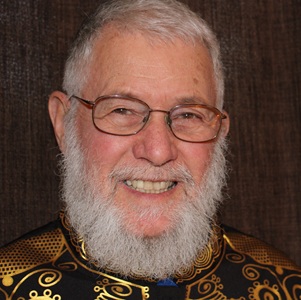
Dr Glen Martin · Emergent Holistic Governance
Dr Glen Martin is Professor Emeritus in Philosophy at Radford University. He is President of the World Constitution and Parliament Association (WCPA), and the Earth Constitution Institute. He is also a member of the Presidium of the Provisional World Parliament, and author or editor of 15 books and multiple articles.
Video not available
The talk, in slides
The original session was not captured cleanly enough to publish. Below is the talk as the speaker delivered it — slide by slide, with a short narrative for each. Click any slide for a larger view.
Jan Smuts saw, in 1926, that wholeness was the deepest principle of reality. A century later, Dr Glen Martin argues that personal awakening, cultural shift and scientific paradigm change cannot deliver an ecologically whole planet while the 1648 system of competing sovereign states actively blocks them — what is needed is an institutional form for holism. That form already exists: the Constitution for the Federation of Earth, written 1968–1991 by hundreds of world citizens and legal scholars, gives humanity common purposes, a tri-cameral world parliament, and an Integrative Complex to administer the planetary commons. Glen has spent thirty years building toward its ratification, and this talk traces both its design and the patient work of the Provisional World Parliament that has been giving it voice since 1982.
Actions flowing from a constitution
The frame for the evening: holism, Smuts' word, taken from a philosophical orientation to an action — actions flowing from a written constitution for the federation of Earth.
The constitution is not theoretical
The Constitution for the Federation of Earth was written 1968–1991 by hundreds of world citizens and legal scholars across four constituent assemblies. It exists as a finished document — here being presented to the Dalai Lama in 2017 by Swami Agnivesh, a longtime advisor to the World Constitution and Parliament Association.
Design for a Living Planet
Glen's 2021 book lays out the constitutional case in full. Its cover carries Teilhard de Chardin's noosphere — the encircling sphere of human thought now visible in the internet and AI — and Ervin Laszlo's verdict: "the achievement of the Earth Constitution solution would mark a milestone in humankind's evolution into a true planetary species."
Smuts and social wholes
Smuts wrote that the individual self only becomes whole through the social wholes around it — language, community, the person becoming through others. Toward the end of Holism and Evolution he named the League of Nations "the expression of the deeply felt aspiration toward a more stable, holistic human society." For Glen, the Earth Constitution is the next, completed step in that aspiration — the incarnation of Smuts' holism in our common human reality.
Eighty-one years on, the UN has not worked
Eighty-one years after the United Nations was founded, the world it was supposed to govern is in worse shape: endless wars, ultra-nationalism, climate collapse, nuclear arsenals, mass impunity. The UN was a beautiful idea that has not worked. The Earth Constitution is offered as the bridge from that failed architecture to a genuinely governed planet.
A pure local community is a fantasy
Glen pre-empts a sympathetic objection. Many in the ecological movement believe the answer is small, bioregional, local. Joel Kovel's response: a pure community is a fantasy and, at present population levels, would be an ecological nightmare — "the local and the particular exists in and through the global whole." Holism, properly understood, demands a federation, not a retreat into villages.
Wilber's four quadrants
Ken Wilber's AQAL chart maps human reality into four quadrants: the inner self, the outer brain and the systems science studies, the shared culture and worldview, and the institutional economic and political structures. Each quadrant evolves toward greater holism — and the bottom-right, where the Earth Federation belongs, is the one still missing its holistic form.
Fragmentation actively blocks all four quadrants
Glen's most important amendment to Wilber: at our present moment, the fragmented bottom-right quadrant — militarised sovereign nations and global capitalism — does not merely lag the other three. It actively blocks them. Selves grow fanatical, cultures turn divided, science is conscripted into war, because the system makes those outcomes inevitable. Personal and cultural holism alone cannot rescue us.
Purpose liberates mind from circumstance
Smuts again: "Purpose marks the liberation of mind from the domination of circumstances." But today, Glen argues, humanity has no common purpose. 194 militarised sovereign states recognise no binding authority over themselves — so the problems beyond their scope (climate, nuclear weapons, pandemics) cannot be solved. The Earth Constitution exists to give the species a common purpose.
Six purposes for humanity
Article 1 names six broad functions: prevent war and secure disarmament; protect universal human rights; obtain equitable economic and social development for all; regulate world trade, communications, currency and resources; protect the ecological fabric of life; and devise solutions to problems beyond the capacity of nations. These are humanity's common purposes, set in writing.
A tri-cameral world parliament
The structural sketch. A House of Peoples (1000 representatives elected directly from world electoral districts), a House of Counselors (200 representatives nominated by universities to speak for humanity as a whole), and a House of Nations (around 300 representatives elected by member states) sit above an Integrative Complex of administrative agencies, a World Judiciary, a World Police, and a World Ombudsmus.
The Integrative Complex
The working machinery: a World Civil Service, World Boundaries and Elections Administration, an Institute on Governmental Procedures and World Problems, an Agency for Research and Planning, an Agency for Technological and Environmental Assessment, a World Financial Administration, and a Commission for Legislative Review. Together they make the parliament's work practical — designed-in coherence, not improvised coordination.
Government as mandala
A visual rendering of the same architecture as a mandala: the parliament at the rim, the integrative agencies inside it, the people's representatives at the bottom, and at the centre the cabinet and world administration — a living circle of governance rather than a hierarchy.
Human dignity at the centre
Another mandala, this time from Glen's 2024 book Human Dignity and World Order: nested rings rather than a tree. At the centre, human dignity; outward through ecological sustainability, the rule of law, equitable economy, world federation. The same architecture spoken in the language of meaning rather than mechanism.
Planetary resources as commons
Here the consequence becomes vivid. Under the present nation-state system, the atmosphere, oceans, aquifers, forests and fossil fuels are "freely exploited" by each sovereign nation. Under the Earth Constitution they become global commons, protected by a World Environmental Authority. The difference is not rhetorical — it is who has the legal capacity to refuse extraction.
Ecology threaded throughout
The Earth Constitution does not treat ecology as a single article. Ecological provisions are woven through it — protection of the ecological fabric of life, regulation of planetary resources, recycling, atmosphere, oceans, climate, food, the rights of future generations and of the natural world itself. Wholeness is built in, not bolted on.
The noosphere arrives, the institution lags
Jeremy Rifkin's recent Planet Aqua (2024) reaches a parallel conclusion from a different angle: a planet-wide Internet of Things mesh, monitoring ecosystems and infrastructure in real time, becomes possible only when there is a planetary body that can act on what it sees. The technology of the noosphere is here; the institutional form is still missing.
The parliament as Gaian feedback
Mandala 2 places the World Parliament inside the Gaian feedback loop: conscious modification of activities, monitoring and assessment, human self-aware activities, Earth system balances and consequences. The parliament is not separate from the planet — it is the institutional way the planet becomes self-aware.
The Provisional World Parliament
Article 19 of the Earth Constitution provides for a Provisional World Parliament — the body that articulates the spirit and letter of the Constitution before full ratification. Since 1982 it has held 17 sessions and passed dozens of World Legislative Acts. The next slides walk through some of them — the patient work happening in the background, mostly outside Western press attention.
1982 · Brighton: first session
The first Provisional World Parliament met in Brighton, England in 1982. Among its first acts: WLA 2 founded a World Economic Development Organisation tying development to environment, energy, equity and democracy; WLA 3 declared the oceans and seabeds "the common heritage of humanity."
1985 · New Delhi: the EERA
WLA 6 founded the Earth Emergency Rescue Administration (EERA) — a body to mobilise on environmental crises that cross borders. WLA 9 set up a World Environmental Ministry, observing simply that "the Earth is the only world we have" and most environmental problems disregard boundaries.
1987 · Miami: clean energy and a global market
WLA 10 founded the World Hydrogen Authority — to develop clean, low-cost energy. WLA 11 created an Earth Financial Credit Corporation to empower a sustainable global market regulated by world law rather than national interest.
1996–2003 · Barcelona, Malta, Bangkok, Chennai
The late-90s and early-2000s sessions tackled global commons in earnest. Most consequential: the World Hydrocarbon Resource Act (WLA 16), placing fossil resources under the authority of the people of Earth rather than the nations on whose soil they happen to lie.
2004 · Lucknow: the World Water Act
WLA 30, the World Water Act, defined fresh water as belonging to the planet and "as a right of every human being and other living beings." It articulates principles of fair access, reasonable quantity, and control of water systems that bridge national boundaries.
2006 · Tripoli: nuclear acts
Three nuclear acts at the ninth session: a Fissile Production Ban (WLA 33), a Nuclear Weapons Dismantling Procedure (WLA 34), and a Nuclear Power Plant Decommission Fund (WLA 50). Possession of fissile materials for weapons declared a class-5 felony under world law.
2007–2021 · the work continues
The movement persisted across Africa, India and online: Kara (Togo) 2007, Nainital 2009, Kolkata 2010, Lucknow 2013, Kolkata 2015, New Delhi 2021. A slow, patient thread of world legislative work, almost entirely under-reported.
2021 · ecological districts written in
The 2021 New Delhi session added a new Article 7 to the EERA — making explicit that emergency rescue work must be organised through ecological districts, embedded in local communities. Top-down only is "psychologically and politically impossible." The constitution gains organs as it learns.
Holism as agronomy, communal, learnable
The principles spelled out: top-down momentum is impossible and immoral; transformation requires people working within the framework of common purposes; restoration is built from the ground up by local cultures who understand their soils and water. Holism here is not abstract — it is practical, agronomic, communal, learnable.
2025 · Pondicherry: parliament becomes permanent
The most recent session, Pondicherry December 2025, established a permanent membership for the Parliament, ongoing four-monthly sessions, a permanent Secretariat, and procedures for updating the Earth Constitution itself. The Provisional Parliament is no longer a series of one-off conferences; it now operates as a continuous institutional voice.
A step on the way
Glen's closing claim: there can be no true ecological holism for humanity without the Earth Constitution. Personal practice, cultural awakening and scientific revolution are necessary — but insufficient — without the institutional form that lets the species act. The Earth Constitution is not the destination; it is a step on the way toward human liberation.
© 2026 Claudius van Wyk. All rights reserved.