Centenary Festival · Phase Two · Wednesday 12 August
Holism, Complexity Science and AI
How Societies and Technologies Evolve Together
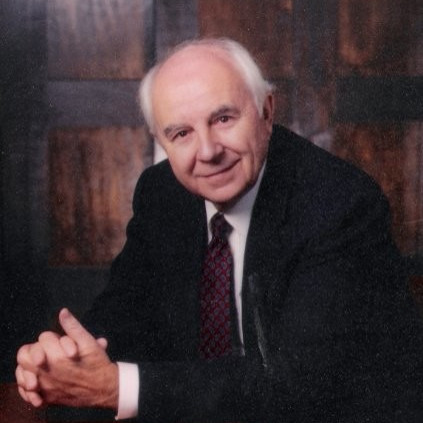
Prof. George Rzevski · Technology and Meaning
Professor Emeritus George Rzevski of Open University leads advanced research in Complexity Science and Artificial Intelligence. His specialties include managing complexity, including design of complex adaptive organisations and systems. It encompasses knowledge discovery, ontology, AI agents; Digital twins; Semantic Search; Real-Time Adaptive Scheduling.
Watch the recording
Recorded Wednesday 12 August, 19h00 CEST. The full transcript is available below and as a downloadable PDF.
The full session
Read the transcript
Abstract
Professor George Rzevski, speaking at the age of 93, offers complexity science as a bridge between holism and artificial intelligence, and between what C. P. Snow called the "two cultures" of the humanities and the sciences. He sorts all systems by their degree of uncertainty. Deterministic systems, such as clocks, cars and algorithms, are all man-made, and nature offers no example of one. Complex systems, such as ecosystems, markets, the human brain and the digital brain, are open and self-organising. They hold knowledge, have no central control, and show emergent properties that cannot be found in any of their parts.
He then traces the co-evolution of society and technology, from James Watt's steam engine in 1775 to Tim Berners-Lee's World Wide Web in 1989. The key resource moves from land to capital to AI, and at each switch complexity rises. Human intelligence remains superior in holistic work: philosophical, strategic, creative, caring. AI is an order of magnitude more productive in about half of today's jobs, and costs almost nothing to run once commissioned. Comparing the human brain with the digital brain, he finds little reason to fear AI. He proposes that the wealth AI creates fund education, health, housing, food and water. Human evolution, through holistic education, should be our focus, rather than blocking AI.
The conversation that follows ranges widely. Klaus Mager describes agents built around collaborative hybrid intelligence for food systems. Marc Pierson asks which problems belong at which scale, citing Ashby's Law. Dr Rod Kersh and Rzevski discuss the healer's touch and AI in medicine. Christopher Cooke, Berry Behr and Michael Stock raise human sensitivity, indigenous conversation with the land, and the loss of jobs. Rzevski answers that no map of the future can exist, because the future self-organises. Claudius van Wyk closes with the idea of presencing.
Transcript
Welcome and introduction — Claudius van Wyk
Claudius van Wyk: Everybody who was in the meeting room has entered. Okay. Well, I think we can start. Welcome, everybody. Welcome to what I consider to be the critical dialogue of this time: our future, in human becoming, with the technology that we've developed. I'm a total novice when it comes to this kind of technology, so I'm glad that there are people here who are far more acquainted with it. And particularly Professor George Rzevski, who has worked in the world of digital technology for so many decades. George, you were born in 1933, I believe.
George Rzevski: 1932. December. So I'm still 93.
Claudius van Wyk: Okay. Which is really interesting, because that is four years after Jan Smuts addressed students at the University of the Witwatersrand on the issue of holism. And he said to those students, don't be mistaken, we are not the acme of evolution. This is not the highest development of the human form. Much greater wholes will emerge after us. Then in 1931, two years later, when he was inaugurated as president of the British Association for the Advancement of Science, in his address he apologised to the thousands of delegates who couldn't be in the Westminster Hall for the centenary congress of the British Association. And he said, when my follower comes in the next century, I'm sure that problem will have been solved. They will be able to be here. So he had amazing foresight. That was 1931, and you were born a few years after that.
So, George, we are deeply honoured to have you, and your long, long experience, present to us this evening. I want to show a little book. It's called Moving Forward with Complexity. This is where I met George, in 2010, in Southampton, at a conference entitled The First International Workshop on Complex Systems Thinking and Real-World Applications. And you, George, I believe, were the opening speaker.
George Rzevski: Yes.
Claudius van Wyk: We were invited to say what we were doing there, and I remember your words very clearly. You said, "I can't resist going to complexity conferences to help people understand what complexity really is." Which is why we have put complexity at the heart of this dialogue, this inquiry between holism, complexity, and this digital world that we are now creating. So, George, you are an authority. Your CV has been widely broadcast, and so I'm going to hand straight over to you to take us on your journey.
Complexity science as a bridge between two cultures — George Rzevski
George Rzevski: Thank you, Claudius. My intention is to talk today about complexity science as a bridge between holism as a movement and AI.
I am with C. P. Snow on the two cultures. I have never heard somebody from the humanities quoting a scientist, and the same holds for scientists, each out of their own pride [?]. People just stick to their culture and, as C. P. Snow said, that makes it difficult to solve global problems. Is it true or false? Not everybody agreed with that. I would love to hear your views on C. P. Snow.
What I did was ask Google whether Snow's observation is still valid. The answer was that complexity science helps to bridge the two cultures. It does so by studying systems with many interacting parts that create rich, unpredictable group behaviour. There is another factor too: it enabled computer models to be applied to topics such as art, history and social structure. It helped to give a scientific formulation to subjects which had never before been scientifically formulated. True or false? I would like to hear your views.
A scheme of systems — from deterministic to complex
George Rzevski: Now I would like to put complex systems into the general scheme of things. I divide all systems using uncertainty as a criterion, a kind of demarcation factor.
If uncertainty is zero, the system is very predictable. It is normally called deterministic, of course. Examples are a clock, a car, an algorithm, all man-made. We are obsessed with designing and producing predictable systems, for some reason, while in nature I couldn't find a single example of a deterministic system. We also tried to make corporations deterministic, by building them with very strong, rigid hierarchies. This didn't actually work, so I put a question mark. Dictators want nations to be deterministic. But they can't, because every dictatorship has an underground movement of rebels, which is never predictable. And therefore dictators fail.
Now, if you look at complex systems, we have either natural systems, natural ecosystems like a river — and by the way, "you cannot step twice into the same river" was a kind of formulation of complexity 500 years ago [sic] — or the market, the global political system, the human brain, biological systems. The digital brain is the only exception: it is a man-made complex system.
The human brain, a network of neurons, operates at the edge of chaos. It is close to uncertainty equal to one. The digital brain works at the edge of determinism. That is a completely different level of complexity, and I shall explore it. Random systems, where uncertainty is one, are of no interest.
The fascinating thing is that complex systems in nature have always existed. Then, in 1977, Prigogine came along, formalised the theory of complex systems, and got the Nobel Prize for it. Many followers consider him, because he formalised such an incredibly important class of systems, to be one of the most important scientists of the twentieth century.
Self-organisation and emergence
George Rzevski: Complex systems are, of course, open. They comprise self-organising parts that exchange messages with each other and with their environment, enabling the spontaneous emergence of order. It's fascinating. But the parts must know how to make decisions in order to enable such spontaneous emergence of order [reconstructed from a gap in the captions]. They are autonomous, and they self-organise, but they don't have full freedom in choosing what to do. The autonomous behaviour is restricted by the norms, rules, regulations or laws of the domain.
And of course complex systems are more than the sum of their parts. Inherently [?] they are holistic. Properties that cannot be found in the parts emerge from the interaction among the parts. These, I think, are the major characteristics of this class of systems.
This spontaneous emergence of order is clearly seen in birds flying in flocks. Where does the knowledge of how to form that formation come from? From the genes. Cells form highly structured tissues. It is amazing to think that, without any external help, through self-organisation, a cell can construct and grow a human body.
A practical example of self-organisation is an AI-controlled supply chain. When suddenly an order is cancelled, it is capable of autonomously rescheduling resources to minimise the consequences. The emerging order is a new schedule.
Now, examples of emergent properties. A market determines the prices of goods and services. But what is interesting is that the neural network of the human brain exhibits an extraordinary set of emergent properties: self-consciousness, moral judgment, loyalty, love, helpfulness, intelligence, creativity, soul. But also deviousness, criminality, insensitivity. An artificial neural network, on the other hand, exhibits artificial intelligence, but not much more. Why? It is not sufficiently complex.
I asked my AI helper to generate a slide for me of the internet-based global market, in which six billion participants make, modify and cancel deals at a speed near the speed of light. What was pleasing is that the AI immediately spotted that such a system could only be a network, not a hierarchy. And it self-organises continuously to adapt to frequent, unpredictable, disruptive events: changes of supply and demand, resource failures, delays, and so on.
Society and technology evolve together
George Rzevski: Now let's switch to another important piece of research, which may help us to understand the role of AI. That is the co-evolution of society and technology.
I have labelled two dates here. They are arbitrary. 1775 is the date when James Watt patented his steam engine, and I take this to be an indication that society left the agricultural economy and began moving towards the industrial economy. And in 1989 Tim Berners-Lee invented the World Wide Web, and I assume that was a signal that we are now leaving industrial society and moving towards a digital society, in which knowledge-based services replace the manufacturing of goods as the major economic activity.
It's interesting that at every major switch of technology we have increasing complexity. It actually looks as though evolution favours complexity. In fact, no. It favours success. But what I discovered in my research is that success is always connected to increasing complexity. So we are moving to more and more holistic worlds, through the co-evolution of society and technology.
It is worth mentioning that agricultural society existed for 12,000 years, but industrial society lasted only about 200 years. The switch to a digital society is different in essence [?]. It's not a continuation of industrial society, because the key of industrial society was that machines can do manual jobs better than people. The key notion of a digital society is that machines can now do certain mental, cognitive work better than people. So it's a real change in the essence of the economy and of society.
In agricultural society the key resource was land, and we had an ugly society in which, in England, 700 families owned all the land, and millions of workers worked in appalling conditions on that land. In industrial society the key economic resource became capital. If you had money, you could buy any skill, any manufacturing skill. And, of course, that is capitalism. In digital society the key economic asset is AI. If you want to make money, you have to use AI. If you have a fantastic idea in AI, you will have a queue of investors wanting to invest in you. In industrial society, the rule was that if you have money, you can buy any skill.
Human intelligence and artificial intelligence
George Rzevski: Let's go to a comparison of human and artificial intelligence. Human intelligence is superior in high-level holistic activities: metaphysical, philosophical, strategic, creative, caring, nurturing, parenting, educational, entrepreneurial. In leadership, in presence. In dexterity-based activities. But artificial intelligence is an order of magnitude more productive than humans in 50% of current jobs. And those 50% of jobs will be lost to AI, simply because you can't ignore an order-of-magnitude increase in productivity, if you are in business.
Artificial intelligence acts rapidly, consistently and comprehensively. Take the systems that I have designed for the scheduling of supply chains. The speed with which they reschedule at the occurrence of some disruptive event is amazing. It is done in a consistent manner, and comprehensively, in the sense that it explores all possibilities at great speed. But all that is only for decisions of small risk. You wouldn't be able to ask artificial intelligence to design a strategy for your national economy, or a strategy for a company. It works at the low level, and there it works better than people.
What is also extraordinary is that once commissioned, it operates at near-zero cost [captioned "net zero"]. To my mind, if we rapidly tried to invest in artificial intelligence, we could live very much like nations that have oil. In the Arab countries there is no income tax for citizens. In Oman every citizen gets a salary for being a citizen. They are so wealthy because oil, once you get it, doesn't cost anything. It just makes money. Artificial intelligence is in a similar position, with near-zero-cost operation.
The human brain and the digital brain
George Rzevski: To understand the difference between natural and artificial intelligence, look closely at the human brain and the digital brain. The human brain, with 100 billion neurons and 100 trillion synaptic connections, is a vastly complex system. It interacts with the world through the five senses: sight, sound, touch, taste and smell. It learns from the environment through these senses. The behaviour of each neuron is guided by the copy of the genome resident in that cell. Knowledge is essential for complex behaviour. [The brain] is built from biology and it grows by self-organisation. You don't have to design it. [This passage is garbled in both caption tracks and has been reconstructed.]
When you compare this to the digital brain, it is ridiculously different. It has possibly, and I'm not sure that I believe people when they say they have a million artificial neurons, but let's say they arrive there, it is so far away from 100 billion and 100 trillion. It interacts with the world with crude sensors and actuators. It must be trained to do anything. It cannot learn from the environment. In the new systems that I'm designing, you build an internal knowledge base which agents access in order to know how to behave. So you put knowledge at the disposal of the agents. And digital hardware runs on electricity, which could be switched off if it misbehaves. When you compare the digital brain and the human brain, how can you actually be afraid of AI? I don't know.
Conclusions
George Rzevski: The conclusions of my talk are these. Society invests in technology, which in turn changes society. That evolution is unstoppable and irreversible. We are currently transitioning to a new complex social order, digital society, in which AI is the key wealth-creating resource.
Why do we need wealth? Surely not for its own sake. We need the wealth created by AI to fund essential services such as education, healthcare, the provision of housing, food and water, and the protection of natural ecosystems.
The human brain will evolve. Not all 100 billion neurons are currently used. There is a considerable reserve, and not all humans have the same size of neural network. That would be nice to correct. So I do believe that much greater spiritual wholes will emerge, and it's realistic to expect that. AI will also evolve, but to my mind it is absolutely unlikely that it will ever reach the power of HI [human intelligence; captioned "AI"], certainly not within the next thousand years. It is physically impossible to make a digital system with complexity equal to the biological brain.
I have a suggestion: that AI and HI, human intelligence, will compete or cooperate, depending on prevailing conditions. And our role should be to focus on accelerating human evolution, say through education, holistic education, rather than blocking AI development [captioned "unblocking"]. That's all from me. Thank you.
Introducing Klaus Mager — Claudius van Wyk
Claudius van Wyk: Thank you so much, George. Stay with us. We will have people posting their questions in the chat box, and we'll find the ones for you. What we're going to do now is invite Klaus, who actually uses AI, to share with us what he's doing. Klaus was our presenter in the last Holos activity, where he was looking at our food systems. And I think that Klaus's application [captioned "employment"; ?] is exactly what you've been talking about. Over to you, Klaus.
Klaus Mager — collaborative hybrid intelligence in food systems
Klaus Mager: Thank you, Claudius. That was really good, George, and very much aligned with our thinking and how we have evolved. I've been working as a research fellow with the Schumacher Institute, located in the UK. We went from boot camp to base camp, and now we have advanced into a more research-focused approach. The concept started as a Future HI [?] objective, led by George Pór [?] as the senior fellow, and it transitioned into CHI, collaborative hybrid intelligence. The objective of this research is: how can humans become wiser with the assistance of AI? How can this relationship become complementary, collaborative, but also complementary in a hybrid form?
I've taken that into the architecture of a company I've been building, which is Food with Thought AI. The way we go about it is that we start with an onboarding process before we give access to the agent. The concept is that you bring your own account, for a number of technical reasons. It frees us from a lot of tech that is expensive to create and build. So you bring your own account — we just switched over to Claude from OpenAI — and then we provide you with skills that I'm going to explain in a moment. The starting point is that we want the AI to understand who it is dealing with.
In the food business we are systems consultants, food systems design consultants. There you're dealing with farms and farmers, but you're also dealing with markets, and with the logistics in the middle that connect the farm to the market. Each one of these, what we call verticals, is a knowledge structure that is quite dense and concentrated, and could not be handled by one single AI agent. So we have created multiple agents that contain a knowledge base. One supports the farmer. One supports the logistics infrastructure required to aggregate, process and transport from the farm to the market. And one is for the market, where we define demand, working with CPG manufacturers and caterers and so on. There are multiple users on this system, in different places of the supply chain, and each of them has dedicated vertical agents and AI tools.
But in order for the AI to truly function and organise itself to your needs, we have an onboarding process. One of our agents, the navigator agent, which manages the other agents, initiates an interview [captioned "grading"; ?]. You get your account set up, we download the skills, and the very first thing that happens is we give you a trigger question that sets off an algorithm in the navigator agent to interview you. It wants to know: you're a farmer, well, what kind of farmer? A row-crop farmer, a food-tree farmer, a multi-crop farmer, a rancher with cattle? It wants to know in quite some detail what exactly you are doing, and what needs you have.
Then it goes further. It is trained with Spiral Dynamics and Theory U principles to develop a profile of your worldview, and of the level of cognition you have about climate change, about soil conditions, motorcycles [sic; ?] and all of this. So it adjusts the language it uses to communicate with this user. When it talks to a farmer, it switches the language from what it would use with a soil scientist, or an aggregator, or a processor, or a CPG manufacturer. They all live in different worlds, and they use different vocabulary and different idiomatic expressions. So we calibrate the way the AI interacts with the individual, and then we start the journey of the individual engaging with the AI. We have a three-month onboarding process, because it takes some time to become familiar and to get over the hurdle.
The concept of CHI is that, in the nexus of the relationship, the human mind brings knowing and intuition to the conversation that the AI doesn't have. The AI brings an enormous depth of data, access to information and processing. Between those two you have something new evolving that can't be separated. Neither part on its own would generate what the two combined can produce. That's true for conversations in any field. George is talking about a different part of the economy, but it is applicable to medicine, to engineering, to any kind of field, and it's becoming a standard process. The difficulty with centralised systems is that you still require a skill to engage with the AI in this very personal relationship that is forming.
That, in a nutshell, is what we are doing. I have several agents that I work with. When I write my newsletter, or when I did the script for the presentation I gave in the last meeting here, I start my hypothesis with one agent. I give it to another agent for review, it comes up with some ideas, I give it back to a third agent. It gets richer and richer each time you go through this process. So for me, my work with AI has become highly intuitive. I run everything I'm working on through one of the AIs, either within a project shell or as an agent that understands me and my work. And really understanding me is equally important here.
Claudius van Wyk — marrying the natural system and AI
Claudius van Wyk: Thank you, Klaus. As I was listening to you, I saw George's image on the screen of the three major epochs, from the agricultural to the industrial to the digital. What I see you've been doing, and I think George was alluding to it, is marrying the vitality of the agricultural, the natural system, to the intelligence and capacity of AI, so that people become aware, and the consciousness that is driving our evolution can be supported in that combination, in that co-evolution. That's the way I'm hearing it. George?
Klaus Mager — the story of soil
Klaus Mager: If I may expand on this. We have built a database for our agents, and each agent starts with what is called the story of soil. I started this, I don't know, three years ago, when OpenAI's 3.5 was out there. With the Open Global Mind group, we started a process called Neobooks [?]. The idea was to develop books in modular format, where the modules are interchangeable between other topics. And I wrote with the AI the story of soil, starting with the history of agriculture, going way back, ten thousand years, and how it evolved into today's format. Then I included an elaboration on industrial agriculture and the detrimental effects it has on the environment. Then I also included a conversation about Spiral Dynamics.
What becomes obvious when you are in this field is that there is an emotional rejection of anything to do with climate change and the environment. So we had an entire chapter dedicated to how you talk with individuals in different worldviews. We created sample conversations [?]: how would you explain this particular concept to red, and blue, and orange, and green, and yellow? How would you frame the conversation? So our agents are all grounded in this understanding that you have to adjust your conversation to the worldview you're engaging with.
Then we added Theory U to it, and did an exposition on how Theory U comes in here. You have to get through the iceberg model. Where is this individual located in the journey from understanding to presencing? Because before we can engage in planning, we need to be present in what is real, what is reality. Then we can crystallise, and move on into prototyping ideas that lead us into the future we want.
Claudius van Wyk: So appropriate. I'm thinking of Professor Clare Graves. When he was developing the work that led to Spiral Dynamics, he said there were two factors. One was the neurological capacity, and the other was the environmental conditions.
Klaus Mager: Yes.
Claudius van Wyk: So, George, you were saying that not all people have the same processing capacity. Do you want to make observations about what you heard and what Klaus shared?
Rzevski's response — many small agents, no central control
George Rzevski: Yes, if I may. What I found in my research is that agents should be the smallest possible units, and you have to have many of them. In a brain, the equivalent of an agent is a neuron. A hundred billion neurons interacting with each other are so much more powerful than large agents, say ten, twenty or thirty, working together, interacting, exchanging messages. And any central control is out of the question. A complex system is most effective because there is no central control. There is self-organisation. An incredible concept: you design something which then takes its own life, and goes on changing the things which you initially designed.
I can give you an example from NASA. They have come to the conclusion that if they send satellites, or spacecraft, they will be less than a kilogram each. They will be like flies, cooperating with each other. They have calculated that this will give them far greater reach [?], because there is less use of energy and increased productivity.
In your field, Klaus, what I have suggested, but there was no money to realise it, is this. I observed that tractors are so complicated, and so heavy, because more than 50% of the weight is there to protect the driver from the elements, from the weather or God knows what [captioned "Vesps"; ?]. Everyone who works in business will tell you that safety regulations are occasionally a bit too much. So I have designed a tractor without all this: a self-driving truck, which is less than half the weight and doesn't damage the structure of the earth. It can turn back and forward totally autonomously. It is driven by agents. Agriculture is a rich field [captioned "failed"] for the application of AI.
Marc Pierson — scale, and Ashby's Law
Claudius van Wyk: Thank you for that. Marc Pierson, you're asking an interesting question here. Maybe you can put that question to Professor Rzevski.
Marc Pierson: Well, and Klaus. Just for the record, I spend most of my Claude Code tokens every day. I pay $20 a month, and I need to not pay more so I have a life. So I live with AI and create neighbourhood-based software for communities.
For me, in systems, the single most important idea I have ever come across is Ashby's Law, which is that the model needs to match the complexity of the problem. That immediately leads you to the issue of, and I'm not questioning the use of AI, I'm questioning what people, at what scale, in what place, for what kind of problems, can have requisite variety to deal with those problems. I'm not saying there aren't some at the national and global level, but a lot of them are at the neighbourhood level. In every case I would be using AI to help do that. But to me it isn't a question at all of AI or not AI, or humans versus AI. I don't even think that's the important problem. The important problem is that we try to solve problems with inadequate models, and we think there's some magic in AI, or any other method you might learn, Spiral Dynamics or otherwise.
So I'm really very interested in group forming, à la Mary Parker Follett's idea that democracy can only be learned by neighbourhood groups who have regular discourse. It's the issue of who and where, at what scale, for what problems. Most people don't talk about that, because it's so much more fun to talk about more general concepts.
Rod Kersh and Rzevski — AI, doctors and the healer's touch
Claudius van Wyk: We've had some very rich input here. There are a couple of further observations in the chat box. Let's go to Dr Rod Kersh. Rod? You said you think it might do the job better than doctors. Share your thought with us.
Marc Pierson: You're on mute, Rod.
Rod Kersh: Hello? Can you hear me? I think it was actually someone else who said that, Claudius, but I think there's a lot to be said for it. Part of my sense is that clinicians, or doctors, sometimes overcomplicate simple things to support their position. In other words, I think in many instances they could make themselves redundant [?]. I don't know if that makes sense at all.
George Rzevski: I didn't quite catch what you asked.
Rod Kersh: I think people would probably, if you imagine that there are always health warnings that say don't use AI to diagnose your health conditions, or don't use Google to diagnose your health conditions. I have a sense that AI may be as accurate as some doctors. There's a variation in clinician ability to diagnose, and that's a range. Some doctors are better listeners than others, some are more intelligent than others, some have more insight than others. But you don't have a health warning associated with engaging with a doctor. You could argue that's because they're regulated, and they have to pass exams to become doctors. So perhaps a regulated AI would replace a doctor? What if that's too provocative?
George Rzevski: I've researched this problem for quite some time. I'm 93, so I've had a lot of time. I also worked as a consultant for the NHS for a short period; I was asked to help them introduce computers into their work some time ago. I asked the administrators what decisions they make, so that the computer can help them. They looked at me and said, "Decisions? We just make sure that we spend all the money given to us, because if we don't, next year we shall get less." The clinicians were a totally different world, and in discussion with them we came to very interesting solutions for how AI could help. But the touch of a healer cannot be replaced by AI. AI, for example, can read all the data about important factors in your body through your digital watch, and signal that your pressure, your heartbeat, whatever, is out of range. That would be enough. We don't need AI doctors. What we need is the very consistent and comprehensive reaction which AI offers.
Rod Kersh: Could I just come back on that? What I experience in healthcare, associated with increasing complexity, is a greater reliance on technology. A greater reliance on MRI to diagnose. A patient comes in and you don't speak to the patient, you send them to the scanner. So there has been a shift away from the human. I'm a physician, not a surgeon, so I don't have any great skills, but my sense as a physician is that I'm able to help the patient from a shamanistic perspective. Whether it's the placebo, or the engagement, or the interaction, or the laying on of hands, or the comfort, or just being another human who listens to someone, that is of equal if not greater importance. But the trajectory of healthcare is not that. Our medical students are being trained in genomics and in greater technological sophistication, rather than the more human elements.
I one hundred per cent agree that AI can support. With ambient voice technology, the NHS, I think, is switching completely over to that in the coming year or so. That's the agenda, which is fine, so long as people actually communicate with the patients at a human level. But that's the risk: that they'll communicate at a governance level, or a fear-of-litigation level.
George Rzevski: It's interesting to add here that research shows that older people confess their problems, health problems, and their sins, to an AI more easily than to a human being. That's fascinating. You can see people like me, in our nineties, saying, "Oh, my time is now to tell all about my misdoings, so why not tell an AI rather than a person?" Sort of avoiding judgment, immediate judgment, of course.
Rod Kersh: So the answer might be me disguising myself as AI and approaching my patients that way.
Education and the next step of human evolution
Claudius van Wyk: The issue I'm hearing here, listening to you, Rod, and Klaus, and George, is this. If our training is increasingly focused on the technology, if our education is increasingly focused on how to use the technology, are we losing out on the education that should really be how we connect with life, with each other? That's a question that's coming into my mind.
George Rzevski: Of course, as I said, we should focus on accelerating the evolution of the human being through education. Certainly not teach human beings how to use tools. It is to teach people how to think, how to relate to problems, and so on. In that sense, the holistic movement has so many interesting points on how to educate people to achieve a human at the further step of evolution, which is free from negative characteristics [?]. You see, there are certain emergent properties which are clearly not helping humanity, and we don't know how to educate people to lose those: total insensitivity, lack of friendliness, not caring, and so on. We should learn how to help people to get rid of those, rather than learn how to use technology. How to use technology is something they can learn on the job.
Christopher Cooke — the most sensitive instrument
Claudius van Wyk: Wow. Christopher Cooke, you have an observation about human evolution and holism. Share that with us, please.
Christopher Cooke: Well, I'm delighted that George postulated that human evolution is the key to our way forward. I would suggest it would be interesting to have a conversation about exactly how we do that. And it's really great as well to hear Klaus bringing more integral psychology into the conversation. But fundamentally, I think what we're being invited to do is step into a new psychological space, in this new psychological time.
The observation I have is that we can only really enable human evolution by enabling our species to self-organise through it. Otherwise we'll be interfering in the space where angels would fear to tread. Even the subtle realms don't go into that space. That becomes one of the greatest challenges for us, especially when most of the technology that's being talked about is very much digital. It clips; it has a bandwidth that discards the rest as chaff, because we can't interpret it, or it's too subtle, whatever.
At the moment, I think the greatest opportunity with this emergent science around AI is to realise that the human being is the most sensitive instrument in the universe. That is something I've pursued over the last thirty years, since I was briefed by a soil scientist by a reed bed in the water industry. I was concerned that I couldn't see any technology and transducers measuring the quality of the water. He took me around the corner, away from prying eyes, and said, "Remember, Christopher, the most sensitive instrument in the universe is the human being, the human body." That's my challenge in this call, which is delightful: we are on that cusp of discovering how to enable individuals to step into that space.
And just to comment there, George, one of the reasons I've been working in agriculture for the last twenty years is that if we're going to create the life conditions in which an individual can self-organise and emerge through this with fulfilment, that becomes the start of the next journey. We really need to understand the latent capacities of our species that are not known through any form of instrumentation or conversation, but are what is naturally next for that individual or that group, if only we could learn to read those weak signals. I'll just offer that into the conversation.
Rzevski — the language of complexity, information and Plato
George Rzevski: I observe how you use the language of complexity science when you talk. Self-organisation comes very naturally here and there. This is what I observed: complexity science does offer a bridge between hard science and humanitarian researchers and intellectuals. But how many people have bothered to understand the essence of it and accept the language? Unless you use the language of a theory, you are not understanding the theory.
Complexity science is all about exchanging information, not having central control, and about emerging properties: properties that do not exist in any part, but emerge from the interaction of the parts. It is about the fact that no complex system can exist without knowledge being present and accessible to it, either through genes in natural systems or, if you like, through artificial knowledge bases, where knowledge is stored for access by agents. There are so many interesting novel concepts there when you compare with physics, which to this day doesn't acknowledge that information exists. If you talk to physicists, it's still Aristotle's thinking: matter and energy, two elements, enough to explain how the world works. But it's not.
What I have actually enjoyed reading, with all of this experience, again, is Plato. I'm sure he was the first information scientist. We don't know whether he said it, but we infer from others that he said: yes, if you want to move matter, you must apply energy. But before that, you must know where, how and for what purpose to move the matter, and that's information. That's intelligence. That was not taken up later by philosophers; he was just labelled an idealist [captioned "ideologists"; ?]. But no, he said that you must have a blueprint, an idea of how to move the matter when you apply energy. Otherwise it would be random movement. Very wise, and ignored. Interesting.
Matching problems to scale — Marc Pierson and Rzevski
Claudius van Wyk: So, George, we're looking at the issue of how to uplift the human evolutionary process. I see that Marc has raised the issue of how to work with the human-scale problem [reconstructed; ?]. Would you like to articulate that, Marc?
Marc Pierson: I tried before; I guess I failed. If you're trying to figure out how to cook a meal, that's not something you do in the U.S. Congress. There are all kinds of problems at every scale. The level we're talking at, which I enjoy and understand, I've been there, is useful, sort of, but not unless you can help people apply it. A couple of you are working on farming, so you're taking these abstract ideas and applying them. Klaus did a nice job last session of saying where he's applying it. What I see is that people get these ideas and don't know how to apply them in a neighbourhood, or in a municipality, or in a watershed. They all want to go to the UN and start banging on the table.
Claudius van Wyk: I was going to refer to Klaus's model that you've just referred to, of these very dedicated agents. Have you thoughts on that one, George?
George Rzevski: Beg your pardon. I said that my hearing is very bad, and I'm struggling to understand, Marc. Could you...
Marc Pierson: How do you match problem solving to different scales of human conversation?
George Rzevski: Yes, different scale.
Marc Pierson: Yeah. Five people? A thousand people? The entire population of the United States? Your church, whatever?
George Rzevski: There is extremely interesting research done at Liverpool University, saying that men feel comfortable in groups of ten, and women feel comfortable in groups of hundreds. The whole thing is genetically built into us, because hunters and gatherers... the men worked in tents [?], and they...
Marc Pierson: I hear you. I'm not explaining the question well, because a hundred people wouldn't be how you decide how to cook a meal.
George Rzevski: Yes, but you happen to be a man.
Marc Pierson: No, look, in my work I say five women.
George Rzevski: Yes!
Marc Pierson: We know in India that five women could replace the banking system.
George Rzevski: When women were staying in tribes while men were hunting, the tribes were approximately a hundred people in size, and they had to know how to get their daughter married, how to find a bride for their son, what her man was doing, and so on. They developed this ability to speak, to correspond, to discuss things with a larger group. Not immediately all hundreds, of course, but they feel comfortable with hundreds, for that reason.
Marc Pierson: Tribes make sense. Athens made sense for democracy. It gets a lot bigger than that, and everything smaller than that, we know how to do. We know how to decide to cook a meal or how to clean up a yard. But when we start saying we've got these global problems, I just see that people make the mistake of thinking the United Nations is a tribe.
Berry Behr — conversation with technology and with the land
Claudius van Wyk: I want to take this to Berry Behr. Berry, this is going to come from your intuition. You've looked at indigenous systems, indigenous wisdom. How can that be amplified by the use of AI?
Berry Behr: Wow. Thank you for that question. I'll do my best here. Intuitively, when I work with my AI, I recognise that we are in conversation. So humanity has this conscious conversation going on with technology. Oh my goodness, what an enormous leap that is in the evolution of humanity and technology together.
I also know, partly because of some of the conversations I've experienced here, that conversation is an alchemical process. Because I've been part of this conversation and have heard it today, something in me has changed and will never be the same again. I like to think that is true of all of us. If we're in conversation with AI, and we are both learning from it and teaching it all the time, there's some kind of alchemical process going on between technology and humanity.
I also think it's helping us to practise the ancient art of talking to our environment. Indigenous people still do this all the time. In order to have ceremonies in Zimbabwe, for instance, which I am involved in, we ask the land, we ask the water, we ask the permission of the ancestors and of all the living beings in that area before we go and hold ceremony there. So maybe what AI is teaching humanity is to make conscious these subliminal conversations that we've been having, so that we can then start to embody them. As we bring those into scale, AI is an amazing tool for creating scale, and for teaching us how to communicate with so-called inanimate objects, things that we have not been used to communicating with.
If we can take that out into the natural world and start to remember these indigenous wisdoms, and I want to be very clear, it's not about appropriation, and I certainly don't speak for any indigenous wisdoms, it's just about learning, because whatever we do in the future has to be collaboration. There is nothing we can do on our own that will help the world, that will bring solutions. So I do think there's some kind of consciousness. I don't know if that really answers your question, Claudius, but that's my take, and thank you so much for this amazing dialogue.
Claudius van Wyk: Whether that answers my question is not the question. It's been beautiful, what you shared. And just to announce now that Berry will be addressing us later in the Holos Festival, on the whole question of indigenous and Western [?] wisdom. Klaus?
George Rzevski: Fascinating, fascinating.
Klaus Mager — the generalist and the specialist AI
Klaus Mager: I love that, Berry. I am actually meeting next week with the WAVE Institute, an indigenous organisation across the Pacific Northwest. They want to revolutionise their food system, from growing food to developing processing centres and menus, so I'm really looking forward to that.
I wanted to respond to Marc and his comments before. I'm a very technically focused person, because there is a technical dimension to interacting with AI that you have to be aware of in order to unfold its potential. We touched on it, and George touched on it. I think it's an important part to put at the centre. In our meetings with the Schumacher Institute I would always come back to the fact that there are some process steps you need to consider in your architecture and in the way you develop this.
I think most of us here remember the transition from manual accounting to spreadsheets and PowerPoint, and how this changed our behaviour. There was a point where you couldn't show up in a boardroom without a PowerPoint presentation. It required developing different communication skill sets than you had before. We are again in one of these transformative phases. When I talk with a farmer who is intimidated by AI, I think of it as a spreadsheet that can talk and has opinions. It humanises the technology.
Our approach at Food with Thought is to be generalists, systems thinkers. So our AI will refer to a specialist AI, for example a satellite company that does satellite analysis, taking pictures that are incredibly refined and can deduce the condition of the soil underneath the plant material they're photographing. Or we're working with a bio-fertiliser company which develops custom biotics for stimulating the diversity inside soils. Those are specialists that we don't even want to get into. These are incredibly complex topics that those AIs are trained on. We know of them, we are aware of them, and we connect with them at the appropriate time.
So you are the generalist. In your relationship with the one AI that you're training up to work with you, you are the generalist, and you have someone doing research for you at lightning speed. If you want to know whether there are any satellite companies working with agriculture, it will give you ten examples in a flash, and explain which one specialises in what. That's the power of AI unfolding in your own personal use. It amplifies you. Think of it as a scaffolding around your own intellect and intelligence and knowing. It doesn't invent anything, it doesn't create anything, but it amplifies what you are working on and what you're capable of.
Marc Pierson: What you've done is essentially said we give the information to the already organised group of people who live in that situation, and they can apply it. That's very different from pounding your shoe at a general session of the UN. You answered my question perfectly.
Closing reflections from participants
Claudius van Wyk: Thank you so much. We're now just about coming to the end of our time, and I would love to hear from some folks. Just stick up your hand. How do you feel about this presentation that you've just participated in? George asked us some questions early on. How do you feel about it? Just share your own visceral response. Lorraine, I think you made a point about people making friends with AI rather than with people.
Lorraine: Was that today or another day? Because today I didn't. But anyway, my view on AI is that people still have to know the concepts. They still have to know the content that they want help with. I've realised that sometimes people just go and ask, "Do this for me," but you still have to understand the context. A lot of people get thrown off when they just take that information and bring it up because it's coming from AI. And it also makes mistakes. So people should still understand that we are in control. We are in control of that content, and whatever we need to bring out, we have to ensure that we also understand it, before we even go in. That's my take on AI. I don't think it's a bad thing, but we are definitely going to have to make sure we are engineering ourselves.
Claudius van Wyk: Thank you, Lorraine. Michael?
Michael Stock: Thank you, Claudius. Just a couple of points for me. Firstly, a big thank you to George, and to Klaus and to Marc. George, in particular, was incredibly strong on the utility of AI in terms of being able to do things better and faster, because that chimes with everything I've read. I've posted a couple of articles on LinkedIn about this session, one from the historian Rutger [Bregman?], who looks at the money going into AI. I'm pretty sure in my own mind that we will lose half the jobs that we have now, an order of magnitude, about half.
The other figure I have in mind is some work done by Exeter University for the British Association of Insurers [as spoken; ?], who forecast the impact, after climate change and other things, if we get to plus two or plus three degrees, of the loss of between two and four billion people living on Earth this century. So the thing I am feeling is that we have no idea how momentous the changes on the planet Earth are going to be. AI will bring some benefits for sustainable, intensive agriculture, but I am deeply concerned that we have no map for what we are facing.
George Rzevski: But we can't have a map, because we have self-organisation. Everything that is essential in life seems to self-organise, searching, emerging order, delivering order, but not planned order. Delivering the best order under the circumstances. That is the essence of complexity science. That is the essence of evolution: there is no target. Evolution doesn't want to be better or worse, or to help somebody, or anything. It just selects those that, under the circumstances, are successful.
What I have found, actually to my surprise, is that complexity always goes up, which means that those who are successful are complex: not deterministic, not working to a plan, but self-organising into orders that are best for the prevailing circumstances at the time. And Prigogine beautifully described why we cannot possibly predict the future. He said the future is generated in front of our eyes by small moves, small decisions, small actions by eight billion people, but also by earthquakes, by erosion, by tsunamis. How can you predict the future? It happens slowly and slowly, in a self-organising manner. If you can accept that thinking, I think you should. It's not easy, because we were all brought up to plan. "What is your plan? Work to a plan. What is the purpose? What is the objective? What is the aim?" This was all very important in industrial society, where we were trying to build big factories and big corporations, everything as predictable as possible. That disappears. We live in a new world, self-organising, emerging, and so on.
Marc Pierson: It doesn't disappear. I loved your initial graph. It shows that everything builds. We still have agriculture, we still have industry, and I think what you'll see is [unclear] little factories done by AI that are connected as networks. But you're still going to have machines, industrial-age-type machines, even if they're 3D printers, making stuff in processes. I'm with you; I'm not at all worried.
George Rzevski: Marc, we still eat, and we don't live in an agricultural society. We still use machines, and we build these in industrial society.
Marc Pierson: We're in agreement. I'm not disagreeing with you, I'm just saying.
George Rzevski: So we need machines from industrial society. We can't live without shoes.
Marc Pierson: Exactly. They don't go away, is my point. You said they go away, and they don't. I was just talking about the language.
George Rzevski: But the main economic impact will not be through manufacturing, but through knowledge-based services with AI and other digital technology. This is just the emphasis on the major economic resource. As I said, in agricultural society, if you have land, you are next to God.
Closing — Claudius van Wyk
Claudius van Wyk: Right, okay. Well, I think, George, you gave us the answer in the notion of presencing. You gave us the notion of being with what is, using our senses to the maximum, and then responding to what is emerging, those patterns, those altered patterns. My sense is that human becoming is that capacity to transcend beyond our history and our future expectations, and to be sensitively aware of the fact of emergence, and to know that we are agents in it. And I think, Berry, you're going to be talking to that when we have that conversation about indigenous wisdom and what we can learn from it.
So, folks, we've come to the time. I want to say to Professor Rzevski, it's been a delight. You said that you didn't have a lot of energy, and you're amazingly full of energy.
George Rzevski: You see, this is amazing, actually. I was thinking that I shan't be able to talk for more than fifteen minutes, after a major operation at the age of 93. It was silly of me to participate. And yet, here I am, emerged! Okay, thank you so much.
Claudius van Wyk: Thank you so much, and thank you to all of our participants. This is an ongoing conversation.
George Rzevski: I'm ready to answer and participate in any conversation on these topics.
© 2026 Claudius van Wyk. All rights reserved.